Monday, 18 May 2015

[www.keralites.net] 17 Body Language Mistakes We All Make


17 Body Language Mistakes We All Make


In several famous studies by Dr. Albert Mehrabian, it was found that 7% of communication is verbal, 38% is vocal (sounds) and 55% is NON-VERBAL. 
 
 
That means that most of the signals we send to those we talk to involve no words, no sound, just our body language. Studies show that most of us commit these little errors every day without being aware of them. So if you want to better protect your thoughts and avoid offense, check out these 17 common mistakes we all make with our daily body language. 

 
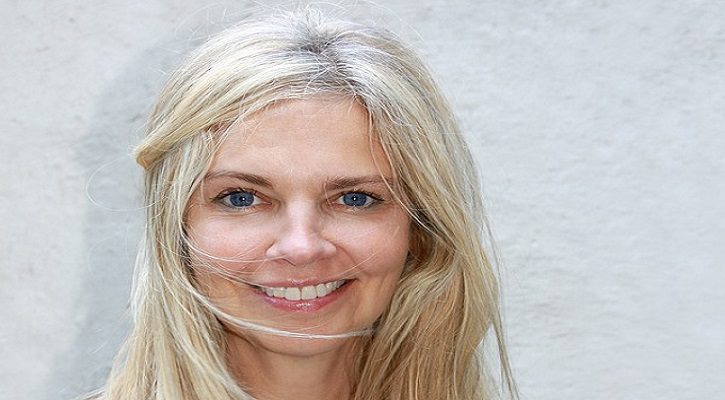
1. Smiling only with our mouths
 
I love smiling, and it's great to see one, no doubt. But when the smile isn't naturally occurring, when you only smile with your mouth but don't let the rest of the face participate - you create a silly impression at best and appear phony at worst. If you feel the need to smile, remember to smile with your entire face and truly mean it. 

 
smile


2.looking up or around you
When your eyes start to wander in the middle of a conversation, especially going up, this sends the message that you are not listening, not interested or not focused. When people are talking to you, look right at them.


3. Fiddling with objects around you.
When we're tense we tend to fiddle with stuff in our hands - roll, tear or play with an object (this includes personal grooming or removing cat hair from your shirt). You may be surprised to hear this, but body language experts agree that this doesn't show nerves, it looks like you are not agreeing with what the other person is saying.


4. Crossing your arms and legs
Crossing your arms and/or legs is a comfortable position, and when we're tense we often feel a strong urge to do so because it makes us feel more protected. However, the other side of this coin is that the person in front of you feels as if you are closing yourselves off to the conversation and to them emotionally. 

 
crossing arms


5. Fidgeting
Restless legs, changing postures every minute, drumming with your fingers or moving your head from side to side - may just indicate you find your chair uncomfortable or perhaps you need to go to the bathroom. But for the person in front of you, the feeling is of nervous ticks that may distract them from what they were saying, or make them feel you aren't really listening.


6. Not looking the other person in the eyes
This is one of the staples of inter-personal communication: Avoiding eye contact, say body language experts, is the first step to bad communication. If you meet someone and they almost never look you in the eyes, you probably felt quite uncomfortable during the conversation. That said, eyeballing someone isn't good either, as it can seem aggressive. Keep eye contact for a few seconds at a time, then look away, and return to eye contact when the other person is talking to you. 
  
 
7. Keeping our hands on our hips
Many of us place our hands on the hips, with elbows facing outwards, so in an subconscious way we feel the need to 'enlarge' ourselves and leave more room for our personal space. This is a defensive position but one that can be interpeted as threatening to the other person. So unless you are going for intimidation, leave the hands relaxed and placed on the thighs or the sides of the body.
 
hands on hips

 
8. Keeping our head low
Lowering your head sends a message of shyness, surrender and even shame. Without even noticing, it places you on a lower status than the person you are talking to. So remember to lift your head and look at the other person directly.

 
9. Nodding too much
When we listen to another and want to show him we agree without interrupting him, we nod. So far so good. The problem is that too much nodding can show you as submissive, as if you are trying to please the other person too much. If you feel like you're nodding too much, try to catch yourselves doing it and deliberately switch to some verbal cues like "yes" or "I agree".

 
10. Doodling on a piece of paper
Sometimes, during a meeting, you need to write some things down, and that's fine. But while you're not writing something important, don't doodle. Keep that for another time. Why? Because that lack of focus is transmitted to the other person, telling them they are wasting their time with you, and of course - it prevents eye contact.


11. Rolling our eyes
Sure, this gesture can be comical around friends and family, but we might be so used to it we do it in an official meeting, which can cause very bad results. Doing this amongst strangers shows not only that you do not agree with what they are saying, but may also convey a lack of respect. It summons the image of a sullen teenager who is just waiting to be left alone. In short - it is rude, and you'd be best avoiding it.

 
roll eyes


12. 'Melting' into our chair
The antidote to a stressful meeting is not lounging or melting into your chair or sofa (lowered shoulders, putting your elbows on the table, leaning back with spread legs etc.) This kind of posture may transmit a lack of caring to the other side, and that you're not really interested in having a conversation at the moment. Sit straight but not rigid, and if you are standing - stand firm.

 
13. Playing with our hair
Playing with your hair is very common in flirtation, so its perfect for a romantic date. However, if we're talking about a business meeting or any other stressful event, keep your hands away from your hair. Playing with your hair may be interpeted as being nervous, rolling or even chewing the hair may be signs of a lack of maturity.

 
14. Pinching our nose while closing our eyes
This movement is what experts see as if you saying to the other person that you are not happy with them and have a negative view of their actions. If you have a headache or sinus pain, you may be doing it without noticing. But try to explain why you are doing it to avoid giving the wrong impression.


15. Touching our nose too often
If you feel an itch, by all means, scratch that nose. But often touching the nose may, subconsciously, send the message you are either lying or hiding something. There's even a medical explanation for it: When our blood pressure rises (like when we lie), our nose tissue and cells create histamine, which causes an itch. Your partner may not know this, but subconsciously they can feel the connection between nose touching and lying. 
 
 
16. Standing with our body pointing at the exit
This is true in any culture. If you want to show your conversation partner respect and interest, you must face them. If you are turning, even with only half your body, towards the door or any other exit in the room, the message is sent that you cannot wait to finish this conversation so you can leave and do other things. If you notice this, correct yourselves and face your partner once again.


17. Cross our hands behind our back
In movies and television shows, we see this kind of stance as connected to learned types or grizzled army men. In reality, standing with your hands behind your back transmits anger, disagreement with what is being said and even a hint of threat or violence. So please, leave this pose to the actors.

www.keralites.net

__._,_.___

Posted by: Pramod Agrawal <pka_ur@yahoo.com>
Reply via web post Reply to sender Reply to group Start a New Topic Messages in this topic (1)
KERALITES - A moderated eGroup exclusively for Keralites...

To subscribe send a mail to Keralites-subscribe@yahoogroups.com.
Send your posts to Keralites@yahoogroups.com.
Send your suggestions to Keralites-owner@yahoogroups.com.

To unsubscribe send a mail to Keralites-unsubscribe@yahoogroups.com.

Homepage: http://www.keralites.net

.

__,_._,___

[www.keralites.net] IT IS NOT SELFISHNESS


IT IS NOT SELFISHNESS


www.keralites.net

__._,_.___

Posted by: Ateeq Ahmed Siddiqui <ateeqahmedsiddiqui@gmail.com>
Reply via web post Reply to sender Reply to group Start a New Topic Messages in this topic (1)
KERALITES - A moderated eGroup exclusively for Keralites...

To subscribe send a mail to Keralites-subscribe@yahoogroups.com.
Send your posts to Keralites@yahoogroups.com.
Send your suggestions to Keralites-owner@yahoogroups.com.

To unsubscribe send a mail to Keralites-unsubscribe@yahoogroups.com.

Homepage: http://www.keralites.net

.

__,_._,___

[www.keralites.net] Theories and Principles of Indian Temple Construction


Architecture
 
Theories and Principles of 
Indian Temple Construction

by Ashish Nangia
 
 
Before we go any further, it will be worthwhile to examine the principles that guided the Hindu Temple architect and mason. How was there a proliferation of high-quality work in throughout the country? Was it a spontaneous expression of creative energy or were there some basic rules to follow, some essential unity underlying the apparent diversity?  
We shall examine briefly the social, religious, metaphysical and material factors that led to the production of Indian temples. 
Supremacy of the Brahmins  

Since the decline of the Gupta dynasty to the age of the Mughals, there was no central political authority through most of India. This political vacuum was filled by the priestly class, who gradually assumed power as the sole arbiters of almost every aspect of life - birth, death, puberty, marriage, business and personal. All these 'favors', of course, had a price and those on whose behalf they 'generously' interceded with the gods would pay the priests by cash or in kind. 

Obviously the serious business of construction was too important to be overlooked either. While the basic concepts of construction and decoration had already been evolved, it was the Brahmins who began erecting a complex edifice of rules and layouts for different classes of building. These were purposely couched in hideously complicated mumbo-jumbo - the better to be well beyond the ken of the common man or even an ordinary craftsman. A lifetime was required to study the rules and more, if possible. 

These rules sometimes assumed ridiculous dimensions. The most basic acts of building were no longer to be based on technical considerations but rather on mythological ones. Thus the Vastushastra was sometimes more of a hindrance than a help to the craftsmen. 

It is in this situation that the genius of the Indian Craftsman came to the fore. In a situation that could easily have been stifling, the mason and stonecutters came forth and created beauty simply by the plasticity of their sculpture and the sheer brute force of their forms. A large part of this was due to the institution of Senis or guilds, about which a brief mention has been made in a previous article. 


Senis - Protectors of Heritage 

As early as the 7th century B.C., Indian craftsmen had organized themselves into guilds, the better to protect their special knowledge, and to gain for themselves better working conditions, and finally to ensure a minimum standard of quality of workmanship. 

In the senis, heredity was the route by which traditional knowledge was passed on through the generations. As soon as a boy was old enough to hold tools, he was set to work on a rough block of stone and so commenced his long apprenticeship. This was the father's sole gift and heirloom to his sons who in turn ensured that his name and style would live on.  

A temple project would often be of such magnitude that more than one generation of master cutters and masons would be required to finish it. So a clan of stonecutters would settle around the building site for years. The temple site attracted young men hoping to learn as well as find work. Thus it became the focus of activity for miles around. Over the years, regional variations introduced for the building of a particular temple led to the evolution of a new style or 'school' of temple building, much like the gharanas that exist in Indian classical music even today. Hence we find distinct schools of art and architecture even within North Indian temple construction - the Orissan, Chalukyan, Gujarati, Kashmiri, and of course, the same situation in the temples of the south, which were further divided into many regional variations and schools of construction. In all these theVastushastra was the giver of cohesiveness, which ensured overall similarity of form and function, but also, as we have seen, was responsible for fettering the imagination of the craftsmen.  


The Magic of the VastuPurushaMandala  

Looking at Hindu temples, it is not very easy to discern that they are composed of one repeating unit - the square. For God's own abode, the form had to be perfect and this limited the choice of shapes to the circle - a form without beginning and end, and the square - perfect for its symmetry. The circle had already been extensively used by the Buddhists in their Stupas and moreover, was perceived to be too dynamic a form for the resting place of the gods. For the Hindus, their gods had to be installed in buildings symbolizing unity, inertia and permanence. The square, thus, was chosen for these qualities. 


This was the origin of the square Mandala (the best translation of this in English is 'divine chart'). The mandala was further subdivided into smaller squares in a grid, those containing 64 or 81 being the most common. Each of these smaller squares was then invested with a resident deity, each with his own special attributes and powers. The distance of the deities from the center was according to their power and perceived importance. 

Thus Brahma, the creator, occupied pride of place in the center and lesser gods were relegated to the edges. A humanistic façade was given to the square by showing it to be able to accommodate a figure in a convoluted yogic posture. 
Vitruvian Man - leonardo da Vinci  

It is interesting to note that this idea, that of the human figure being the basis of a system of proportion, was also used in the European Renaissance by Leonardo de Vinci, and later by Le Corbusier, planner of Chandigarh in India, in his Modular system of measurement. 
  

Thus, having acquired magical and theological properties, the VastuPurushaMandala was fit to be the basis of temple construction, with many permutations and combinations being used to achieve the final form. 

Very simply, the central square could be used for the garba-griha, while the surrounding grid formed the pradakshina-path and outer wall, and so on
By increasing in complexity this system of proportion could spawn the most complex of forms with their basic unit remaining the square. It was by manipulation of this basic grid that the Indian architect created the greatest temples of India. The best examples, the glorious days of Hindu architecture, shall form the basis of our next article. 

www.keralites.net

__._,_.___

Posted by: Pramod Agrawal <pka_ur@yahoo.com>
Reply via web post Reply to sender Reply to group Start a New Topic Messages in this topic (1)
KERALITES - A moderated eGroup exclusively for Keralites...

To subscribe send a mail to Keralites-subscribe@yahoogroups.com.
Send your posts to Keralites@yahoogroups.com.
Send your suggestions to Keralites-owner@yahoogroups.com.

To unsubscribe send a mail to Keralites-unsubscribe@yahoogroups.com.

Homepage: http://www.keralites.net

.

__,_._,___

[www.keralites.net] 21 Business Skills Needed To Succeed


Beyond those personal qualities though, what makes a successful business person stand out from the crowd? Here are 21 business skills you need if you want to get ahead:

Communication

1. Written - Most people in business spend a lot of time communicating in writing. While the inter-office memo and the fax are old hat, you will spend a good few hours a day fighting your inbox. Add to this reports, white papers, proposals and resumes, it's certain you will need to sharpen your word power to succeed.
2. Social Networking – We are not all social gadflys, some of us struggle to make small talk. It is a key skill to learn though, it is true what they say, sometimes it is more who you know than  what!
3. Speaking – Public speaking ranks high amongst the worlds most popular fears. You must overcome it and the best way is to practice. It might feel more comfortable working from the safety of your desk but at some point you are going to have to present. Better to have some experience under your belt before being forced to perform unprepared when it really counts.
4. Sales – You might think you do not need to sell but we all sell every day. From even before your first day you will be selling, starting at your interview all the way to asking the boss for a raise. In  normal life we sell, persuading your partner that you really need that new purchase, getting out of that parking ticket … persuasion skills can come in very handy indeed.
5. Negotiation – If you can't sell perhaps you can negotiate. A lot of the skills are the same but you will find people who have been in business for a while can drive a hard bargain. If you do not have the skills you will lose out each and every time.

Planning

1. Strategic – A business that lurches from one crisis to another is not going to stay around very long. Obviously if you are in charge then you have to set the marching orders. Can you clearly see the road ahead?
2. Project – I know many people in business who see their role as the hot headed maverick that shoots from the hip and flies from the seat of their pants. Unfortunately most of them eventually crash and burn. Project management makes your life and that of your team less stressful and gets things done on time and on budget. It might not be the white knuckle ride that some enjoy but at least you will be able to clock off at a reasonable hour!
3. Financial – The top reason why businesses go out of business is bad financial planning. All the cash flows in the wrong direction. Having worked through the dotcom boom and bust I have seen first hand what too big a budget in the wrong hands can do. Someone needs a firm grip on the numbers and it had better be you otherwise someone might just take a trip to a tropical island at your expense.
4. Risk – I'm a natural worrier which though it annoys my wife, does have the advantage in business that I tend to see the potential potholes and bear traps in any plan. If you can imagine a risk you can set about to mitigate it.
5. Logistics – Money is just one resource you need. Any business has inputs and outputs. You need to have the right people in the right jobs with what they need when they need it to get their work done. Logistics might not put you on the cover of Time magazine but it could make you a hero in your office.

Productivity

1. Time management – I once had a boss who could never get to a single meeting on time. He would always turn up ten minutes late, red-faced, unprepared, looking like he had slept in a bush. He had a growing collection of speeding tickets and a bigger collection of excuses and apologies. Time management reduces stress and increases your respect.
2. Meeting management - Most of us hate meeting but they are a fact of business life. There are always the few who love them as a way to avoid real work. There are many tricks from firmly sticking to the agenda through to holding meetings standing up just before lunch. Whatever works for you if you can get meetings to be productive and under control you will get ahead.
3. Leadership – In the Dilbert universe leadership might be something you step in, but in business it really helps to be able to take the lead. Can you get people to follow you? Are you able to get people to do things they don't want to do for the good of the team?
4. Systems – If you are repeatedly re-inventing the wheel there is something seriously wrong. Effective systems bring consistency, efficiency and reduced costs. Learning how to create and implement both human and automated systems can go a long way to being more competitive.
5. Personal Productivity – What are your rhythms, when are you more sociable, detail-oriented, creative or lacking energy? Where do you excel and which areas are a struggle? Before you can lead anyone else you need to work out how to get the best out of yourself.

Creativity

1. Imagination – Many people neglect their creative side feeling that it is better to be all about the logic, but in fact some of the most successful business people are also the most imaginative.
2. Inventiveness – If you can imagine it you can create it, and if you create it then you can sell it! Look around you, think of the things you buy and use, someone had to have the idea before it was built and sold to you. You might be surprised how few mad inventors there are, more products are invented in a marketing office than a garage.
3. Problem Solving – A big part of surviving in business is about solving problems fast and effectively. An employee who is good at keeping their head in a crisis while fighting fires is a worthwhile asset to any business.
4. Brainstorming – Some people think brainstorming is all about having stupid ideas while ridiculing the contributions of everyone else while drinking coffee, eating cookies and flirting with the secretary from floor 2. Perhaps this is why brainstorms get a bad name? If you can brainstorm great ideas, fast then you will be one step ahead.
5. Making connections - Some of the best ideas have simply been about connecting two otherwise unconnected ideas together. Could you invent the next iPhone?
I am sure the sharp-eyed amongst you have noticed there are only 20 points in this list. What is number 21? Perhaps the most important skill of all; the ability to switch off! It is so easy for the stresses and strains of business life to burn people out so you must develop the ability to relax and unwind.
Source: BusinessSchool


www.keralites.net

__._,_.___

Posted by: Junaid Tahir <mjunaidtahir@gmail.com>
Reply via web post Reply to sender Reply to group Start a New Topic Messages in this topic (3)
KERALITES - A moderated eGroup exclusively for Keralites...

To subscribe send a mail to Keralites-subscribe@yahoogroups.com.
Send your posts to Keralites@yahoogroups.com.
Send your suggestions to Keralites-owner@yahoogroups.com.

To unsubscribe send a mail to Keralites-unsubscribe@yahoogroups.com.

Homepage: http://www.keralites.net

.

__,_._,___