


Melukote – The Badrinath of South India
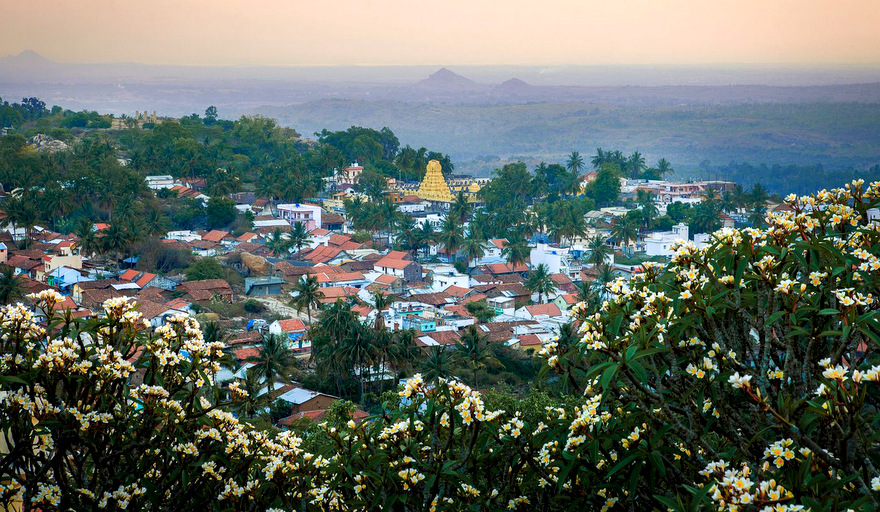
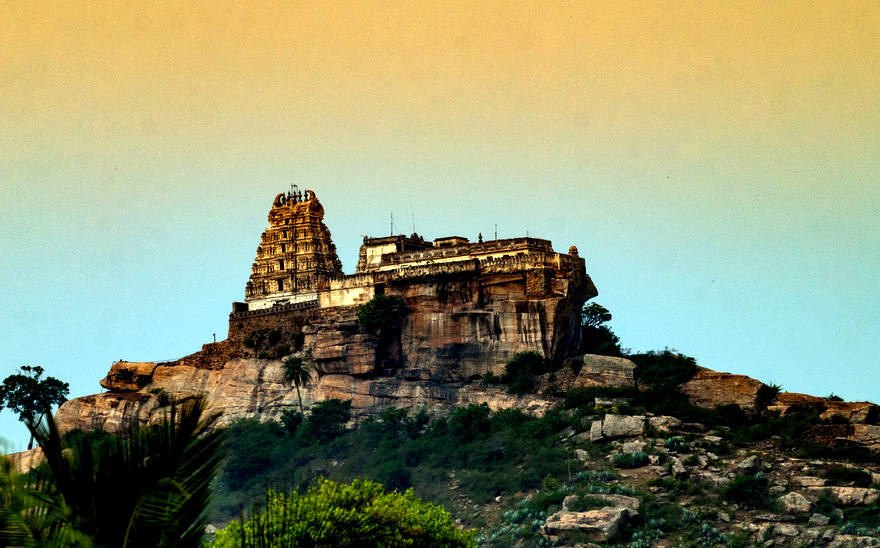
Melkote is the temple town situated in Mandya district of Karnataka state in India. The main temple, also known as Thirunarayanapura, is built on rocky hills called as Yadugiri or Yadavagiri overlooking the Kaveri valley.
Lord Vishnu is worshipped in different forms across the world and Cheluvanarayana Swamy Temple is one of the many temples dedicated to Lord Vishnu. The temple is located about 156 kilometers from Bangalore and about 48 kilometers from Mysore.

The spiritual significance of Melkote is described in different Vedic scriptures such as Naradiya Purana, Matsya Purana, Ishwara Samhita as well as Kashi Mahatmya. Melukote is also praised as Badrinath of South India.

Melkote is a place of great spiritual significance. Many astonishing events related to Lord and His devotees have taken place in Melkote, so this place is called as an Abhimana Sthalam.
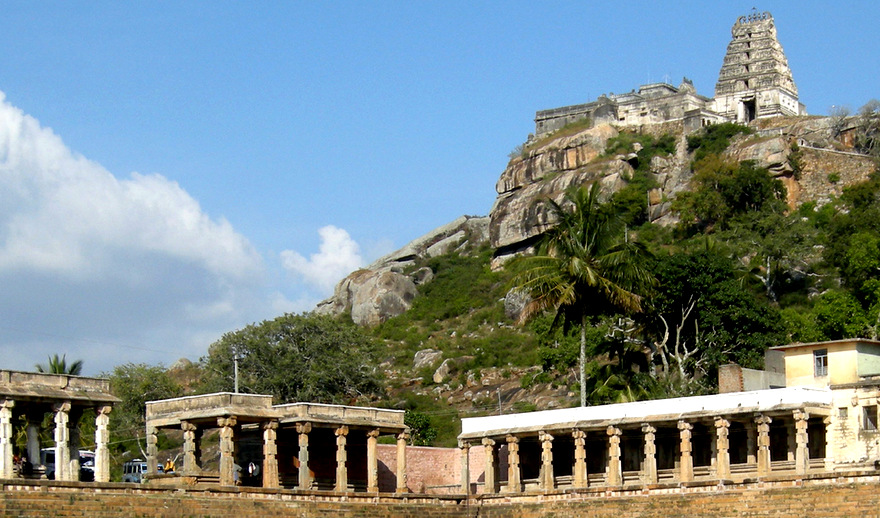
Melkote contains two ancient temples in which Cheluvanarayana Swamy Temple has two very ancient deities of Lord Vishnu and Yoga Narasimha Temple which houses ancient deity of Lord Narasimha. All these deities have come down to this planet Earth through the hands of the great devotees of Lord as well as different incarnations of Lord Vishnu Himself.
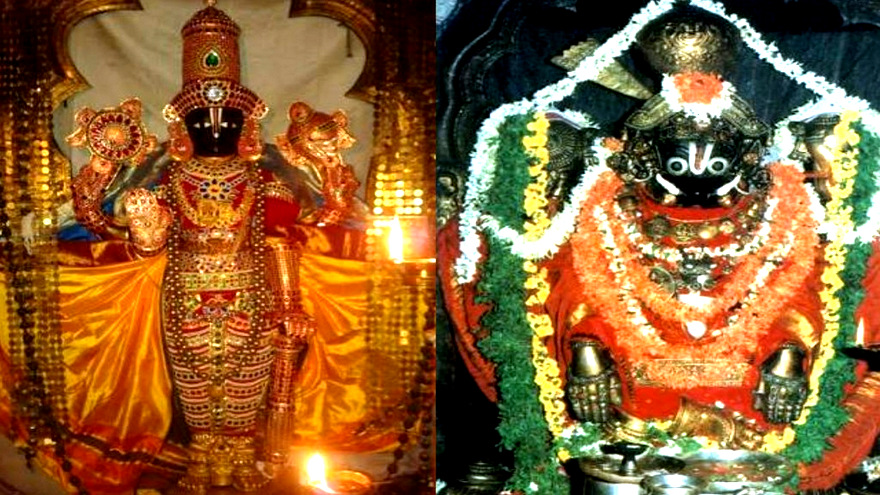
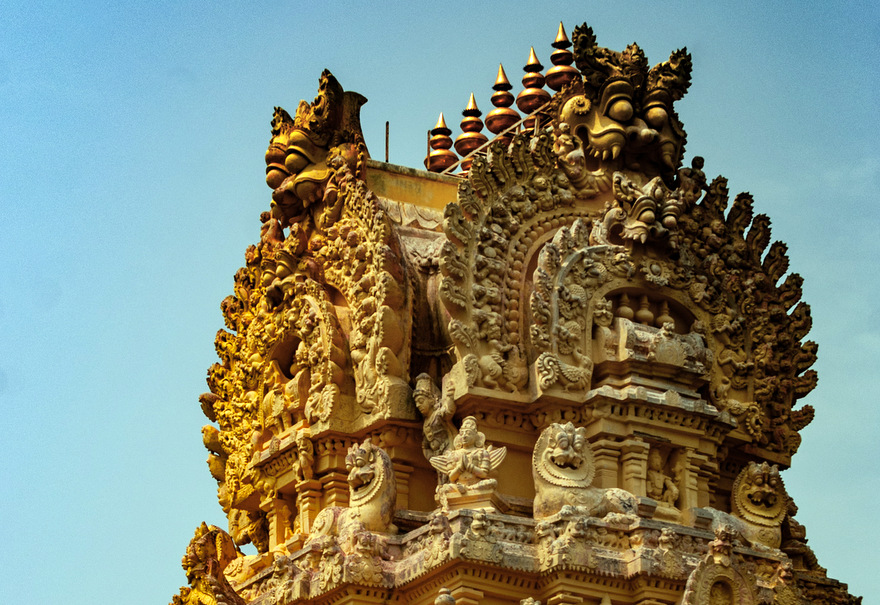
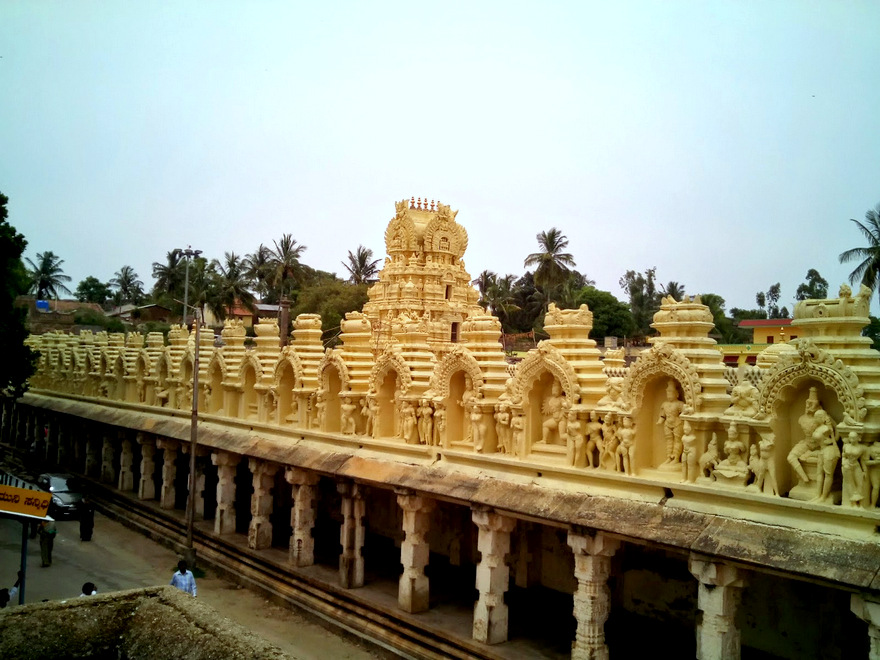
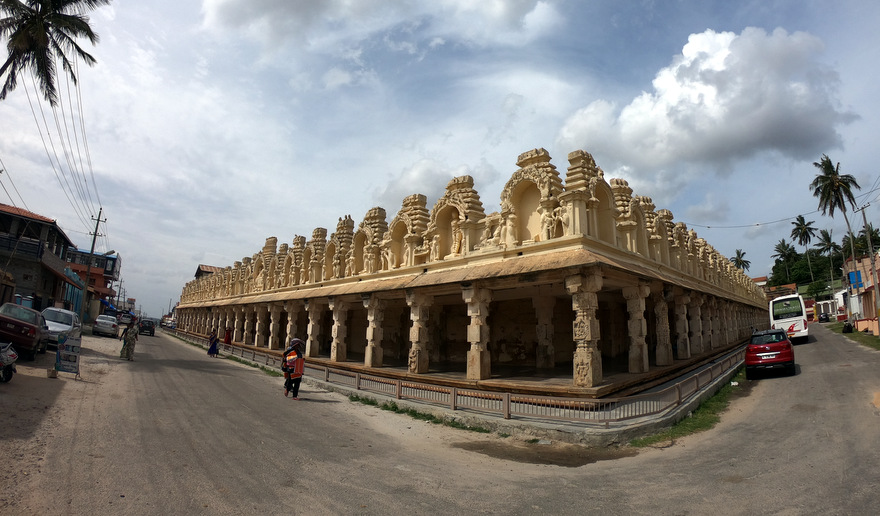
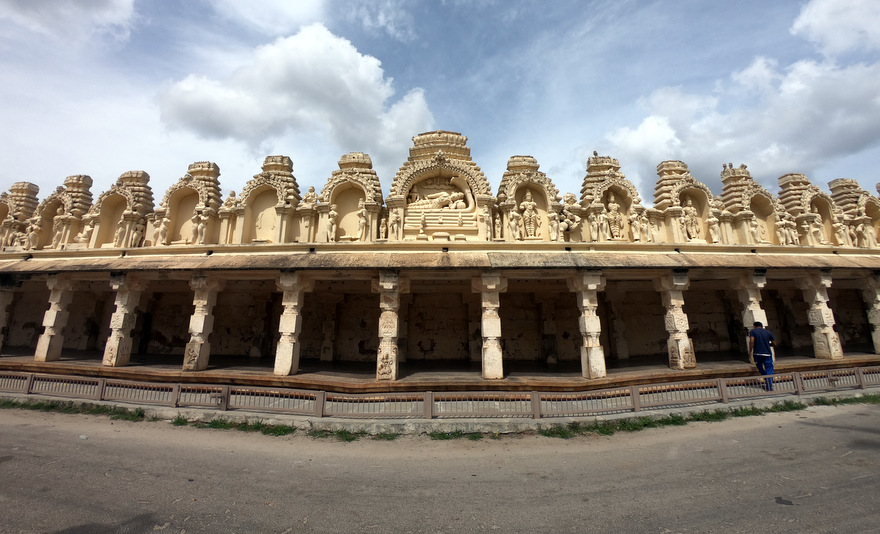
The Temple has a Chaturmukha Gopuram (Four faced). It looks alike from all four sides. This design is not commonly seen elsewhere. Sri Ramanuja built the temple up to its 'Shukanasi' stage. The kings of Mysore built it further. The temple in Melukote is smaller than the temples at other centers. However the divinity of the place is very high.
Dedicated to Lord Cheluva-Narayana Swamy or Thirunarayana. The utsavamurthi, which is a metallic image, represents the deity who is called Shelvapillai, Cheluva Raya and Cheluvanarayana Swamy, whose original name appears to have been Ramapriya (meaning "Rama's Favourite").
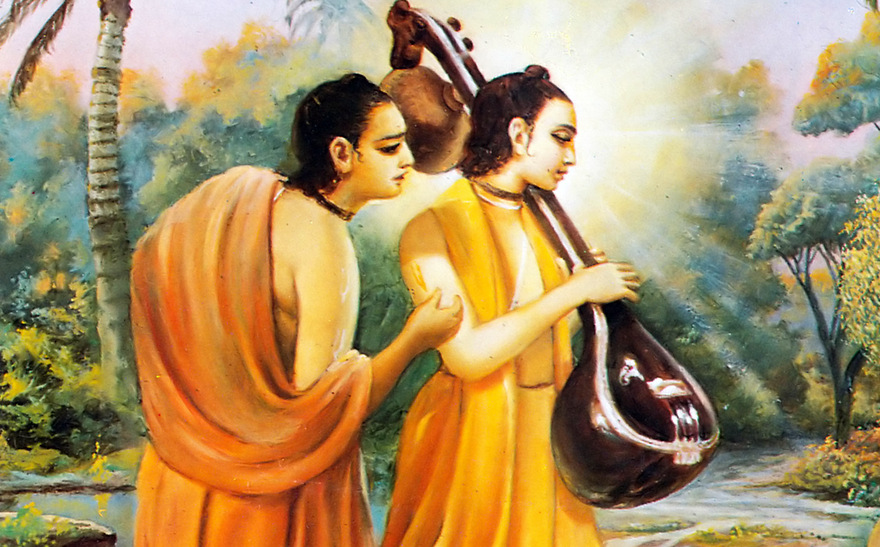
As a number of great sages such as Narada, Vyasa, Bhrugu, Shandilya etc came here to acquire knowledge, this place is also known as Dnyana Mantapa meaning "The house of knowledge".
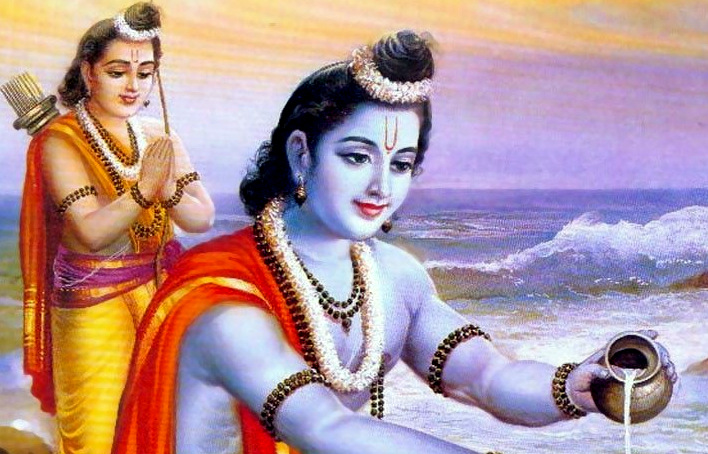
As the hill of Melkote is closely associated with Lord Narayana, it was knows as Narayanadri. In Satya Yuga, Lord Dattatreya taught Vedic knowledge to his disciples such as Medhatithi and Prahlada in these mountains so this place is called Vedadri. In Treta Yuga, worshipped by Lord Rama and the kings of the Surya Vamsa Dynasty for generations. In Dwapara Yuga, this hill was known as Yadugiri because Lord Krishna and Balram with Yadu family often came down here to worship Lord Narayana.
In Kali Yuga, this hill is known as Yati Shaila because, early in the 12th century, the great Srivaishnava saint Ramanujacharya took up his residence and lived in this location for about 14 years and rebuilt and revived this place thus became a prominent centre of Srivaishnavism, forming the Mandyam Iyengar community.

The annual report of the Mysore Archaeological Department states on the strength of epigraphic evidence, that the presiding deity of this temple was already a well known object of worship even before Sri Ramanujacharya worshipped at the shrine in December 1098 CE. And even before he came to the Mysore region and that very probably he used his influence to rebuild or renovate the temple. From the records of the period, existence of Tamil influence and Vaishnava worship in the area are also evident.

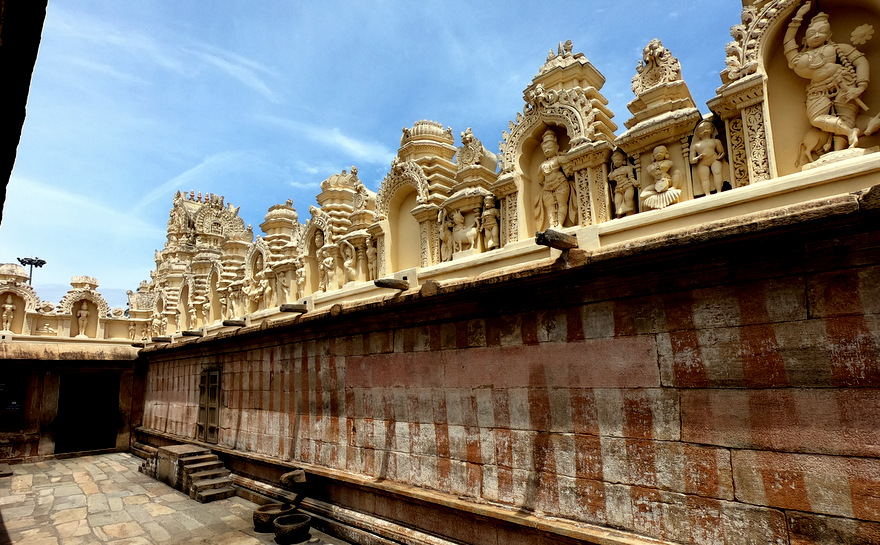
A number of inscriptions and records of the place speak of the land grants and gifts to this shrine. Perhaps the fort on the hill was built during Hoysala period. The renovated temple has a beautiful gopuram.
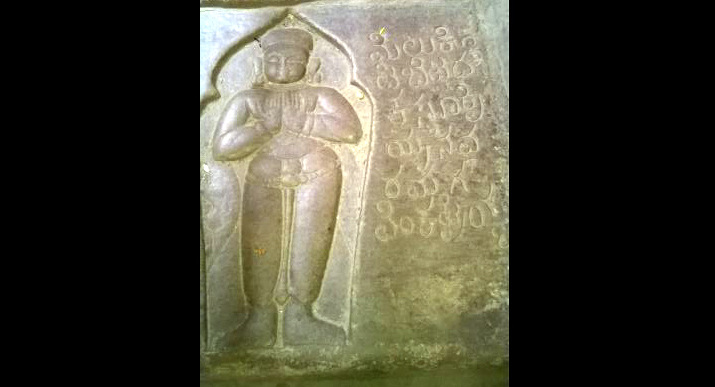
The temple is richly endowed, having enjoyed the special patronage of the Rajas of Mysores. As early as 1614, King Raja Wodeyar I (1578–1617), who handed over to the temple, the estate granted to him by Vijayanagar Emperor Venkatapati Raya. He was said to have been a great devotee of the presiding deity and a frequent visitor to the temple.
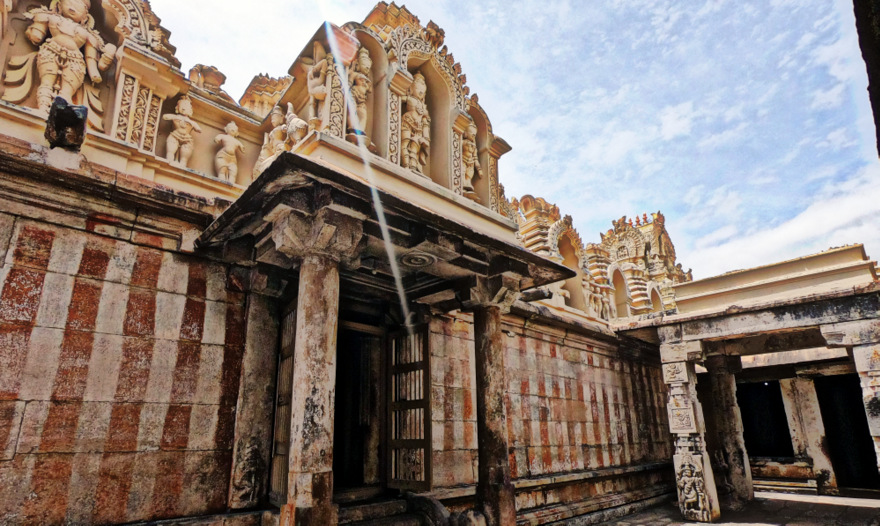
A gold crown set with precious jewels was presented by him to the temple. This crown is known as the Raja-mudi (royal crown). According to legend, King Raja Wodeyar was observed entering the sanctum sanctorum of the Lord on the day of his death, and was seen no more afterwards.
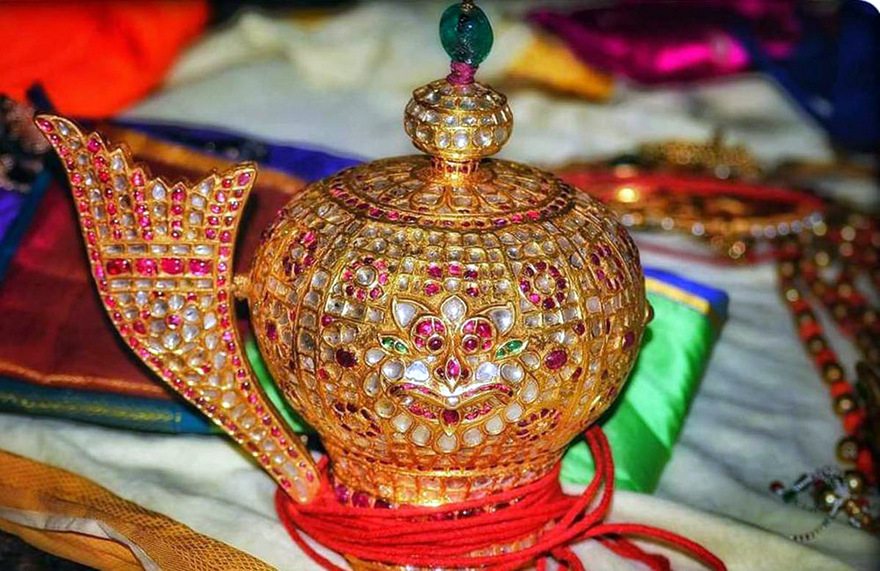
From the inscriptions on some of the gold jewels and on gold and silver vessels in the temple it is learnt that they were presents from Krishnaraja Wadiyar IIIand his queens. Krishnaraja Wodeyar III also presented to the temple a crown set with precious jewels. It is known after him as Krishnaraja-mudi.
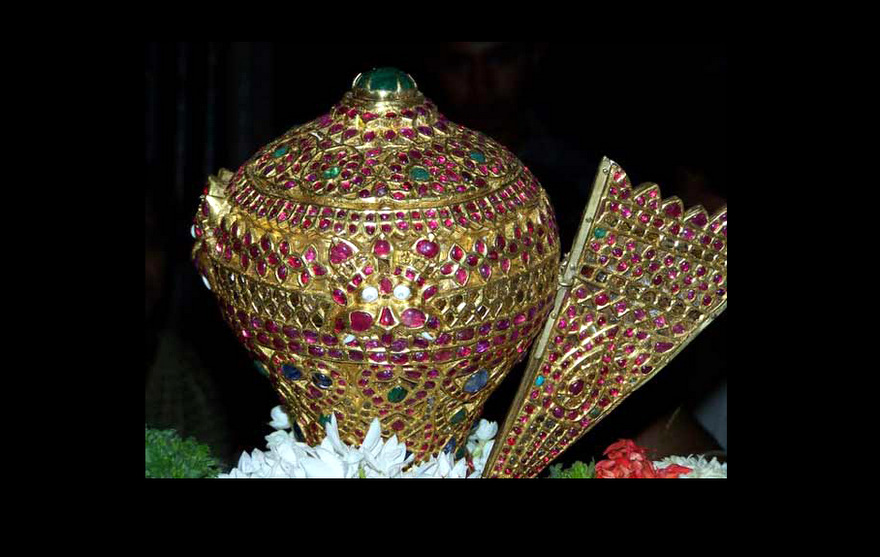
The Vairamudi ("diamond crown"), another crown of great value, seems to be older than the Raja-mudi and the Krishnaraja-mudi. We will discuss about this Vairamudi crown later in this article.

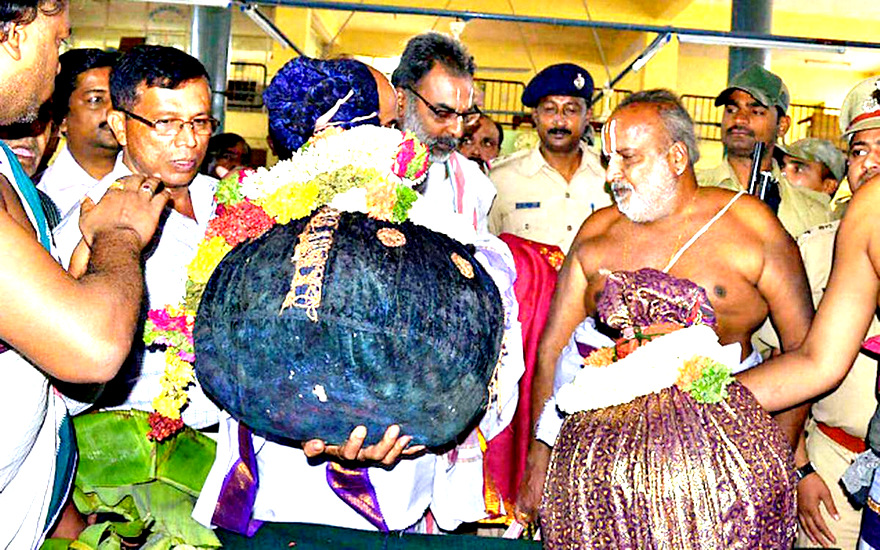
All the three crowns are kept in the safe custody of the Government and brought to the temple on specific annual occasion for adoring the image of Cheluvanarayana Swamy.
How the deity of Lord Tirunarayana came here is a very interesting fact. Lord Brahma, who is a secondary creator of the universe, wanted to have a deity of Lord Vishnu for worship. He performed austerities for the same. At the end, the deity of Lord Vishnu appeared before Lord Brahma in a beautiful celestial plane. This deity of Lord Vishnu is known as Lord Tirunarayana. Lord Brahma worshipped this self-manifested deity for a long time in Brahmaloka.

Later, Lord Brahma's son Sanatkumar requested his father to give him the deity of Lord Tirunarayana so that he could worship the Lord.
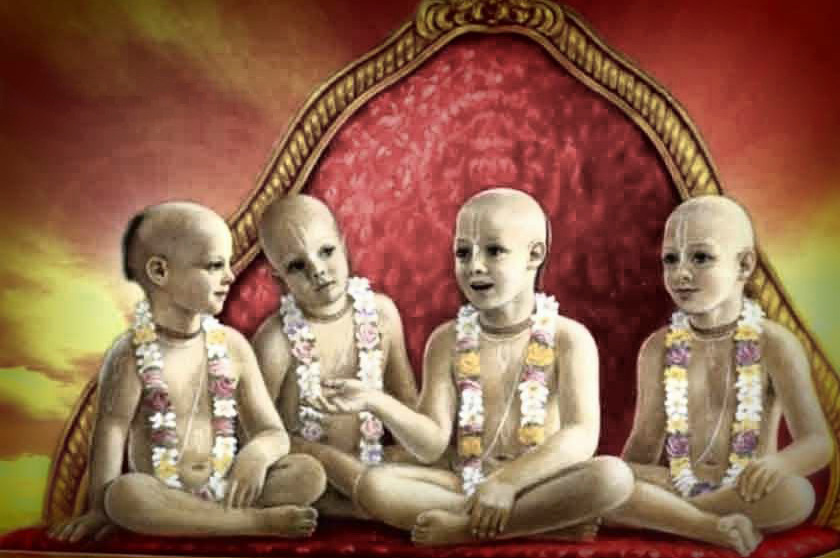
Lord Brahma then gave the deity to Sanatkumar who brought it to this planet and installed it in Melkote for the benefit of masses. In this way Lord Tirunarayana came to Melkote and today He is present in His temple which is situated in the town.

There is another deity of Lord Vishnu which is known as Ramapriya. This deity is present in the temple of Lord Tirunarayana itself. This deity is a utsava murty, which is taken out of the temple for procession during the days of festivals.
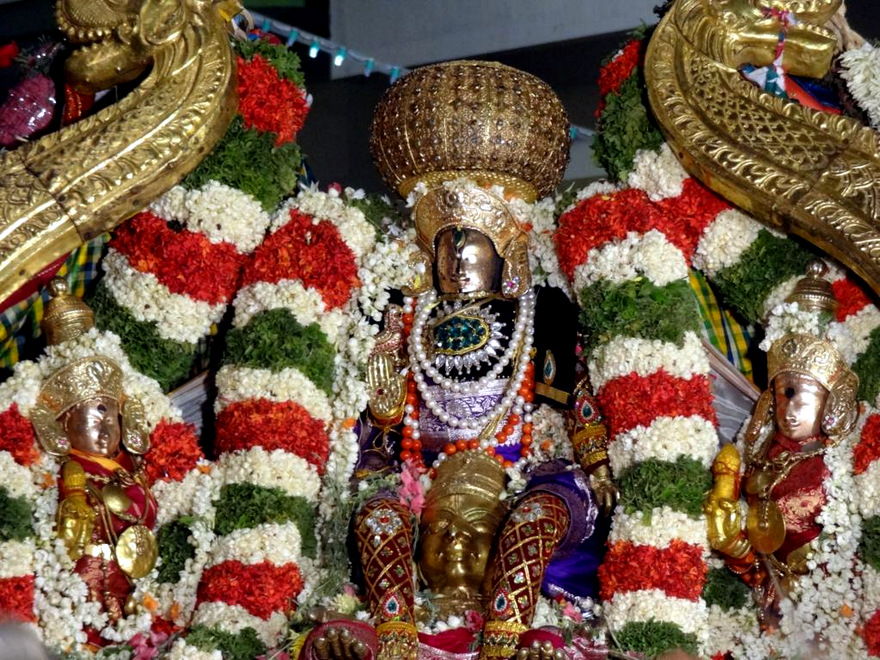
When Lord Brahma gave the deity of Lord Tirunarayana to his son Sanatkumar, he once again performed austerities to obtain another deity of Lord Vishnu for his daily worship. This time Lord Vishnu manifested a very beautiful deity from His heart along with the deities of Shridevi (mother Lakshmi) and Bhudevi (mother Earth).

This deity is known by two names. The first name is Shri Cheluvaraya Swami and the second name is Ramapriya.
Later in the times of Ramayana, Lord Rama came back to Ayodhya after defeating daemon Ravana. At that time, a deity of Lord Ranganath was present in Ayodhya and it was being worshipped by Lord Rama and His family. Lord Rama made Vibhishana the king of the golden city of Lanka and instructed him to go to Lanka and rule there. Lord Rama gave Vibhishana the deity of Lord Ranganath so that he can take it to Lanka. But on the way to Lanka, the deity of Lord Ranganath decided to stay at Srirangam and it can still be found there.
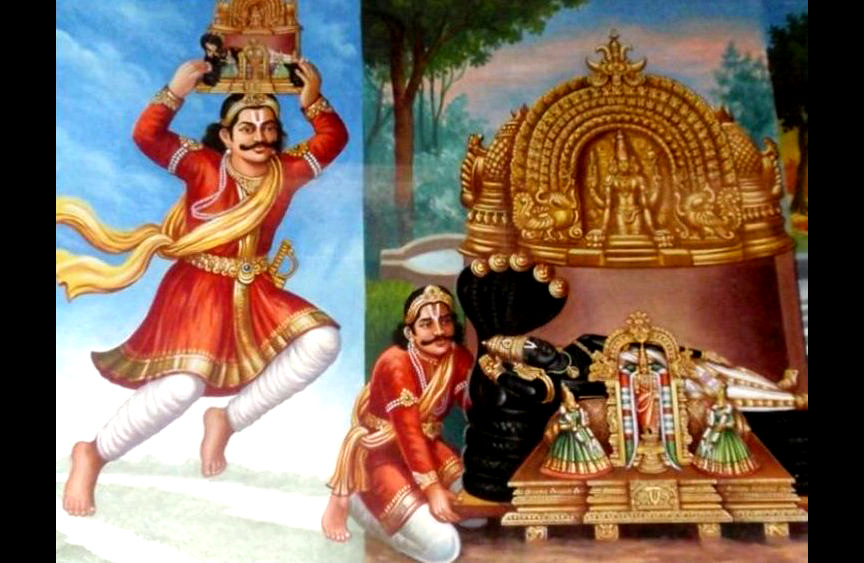
Because of these happenings, Lord Rama did not have any deity of Lord Vishnu for His daily worship. Seeing this situation, Lord Brahma gave the deity of Ramapriya along with Shridevi and Bhudevi to Lord Rama. Because these deities were very dear to Lord Rama, they are known as Ramapriya. Lord Rama worshipped these deities with great love and opulence. Later, Lord Rama's son Kusha worshipped these deities. Kusha's daughter Kanakamalini was married to Yadushekhara of Yadu dynasty and she took Ramapriya with her.
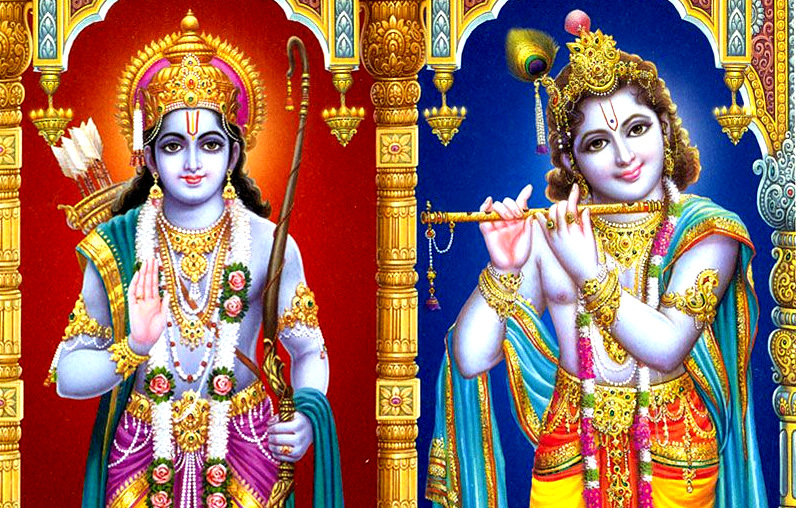
In this way the deity of Ramapriya came from the Solar dynasty of Lord Rama into the Lunar dynasty in which Lord Krishna and Balarama appeared later. In the times of Mahabharata, Lord Krishna and Balarama used to worship Ramapriya in their house.
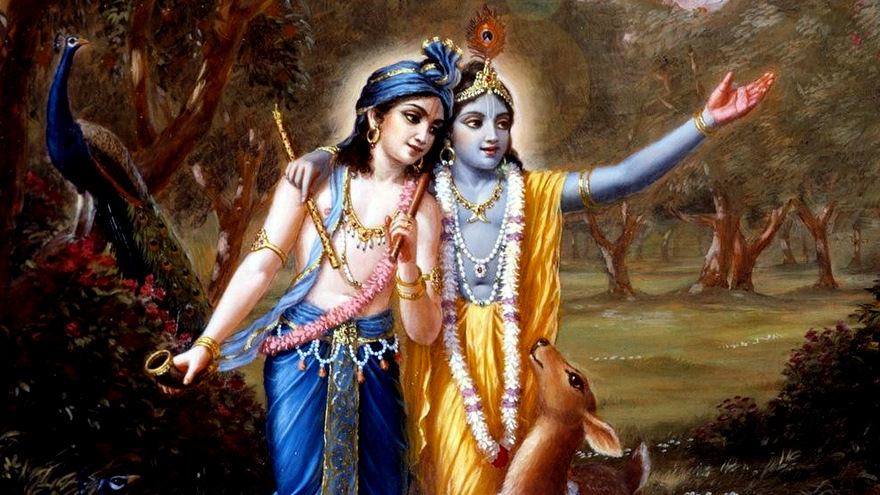
Once Balarama came to south India on pilgrimage. When he visited Lord Tirunarayana in Melkote, He found that the deity of Lord Tirunarayana is strikingly similar to the deity of Lord Ramapriya in their house.
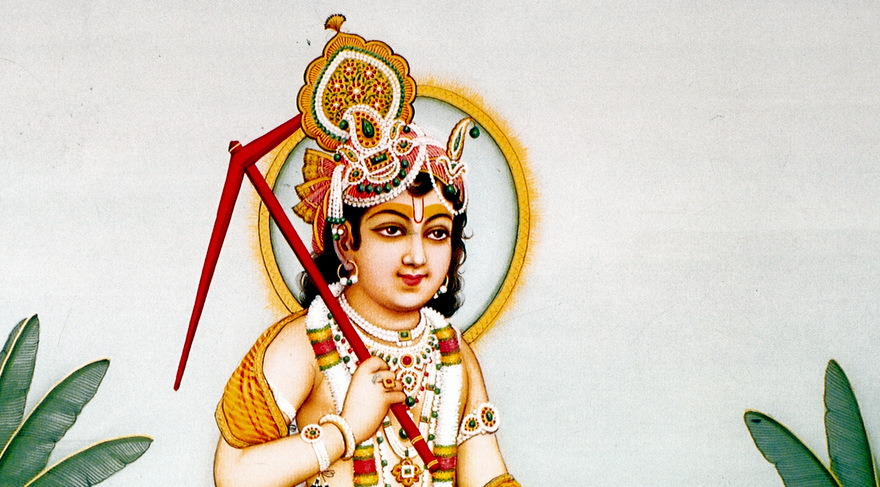
When He came back home, He told Shri Krishna about this similarity. After this incidence, Krishna and Balarama brought the deity of Ramapriya to Melkote and installed it here.
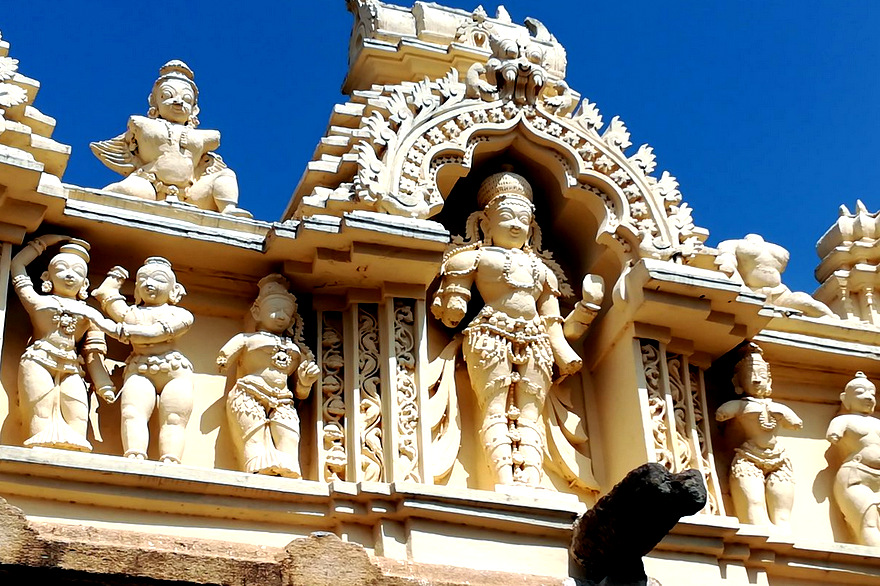
Today, this deity is also situated in the temple of Lord Tirunarayana. Lord Krishna and the members of Yadu family often visited Melkote to worship this deity. Therefore Melkote is also known as Yadugiri.

In this way, the two ancient deities namely Lord Tirunarayana and Ramapriya are still present in the town of Melkote in the same temple.
After Lord Krishna left this planet and the age of Kali started, the spiritually vibrant atmosphere of Melkote was greatly affected by the forces opposing the religious principles. Melkote suffered attacks of foreign invaders who plundered the wealth of the temples. During these hard times, the temple of Lord Tirunarayana was lost and the area of the Melkote town was eventually covered by thick cover of forest. The deity of Lord Tirunarayana was covered under ground and the knowledge of its existence and whereabouts was lost to human kind.
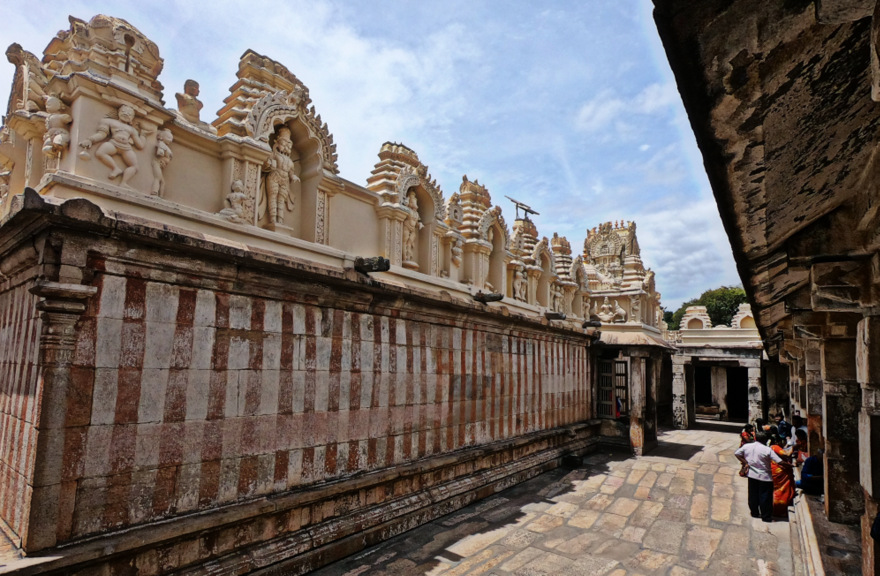
The deity of Ramapriya was taken by the foreign invaders as a loot from the temple and the knowledge about this deity was also lost. The spiritual significance of Melkote was hidden from the human society for a long time. In the 11th century AD, one of the great spiritual masters of India, Shripad Ramanujacharya, re-established the temple of Melkote.
Ramanujacharya was one the greatest spiritual masters of India. He was mainly stationed in Srirangam but due the persecution of Lord's devotees started by the King of that region, Ramanuja had to leave Srirangam. After travelling to many places, he reached a place called Tondanur. The king named Bittideva used to rule that region. He was a follower of a Jain philosophy but after Ramanuja released the king's daughter from the control of evil spirits, the king became an ardent disciple of Ramanujacharya and changed his name to Vishnuvardhana.
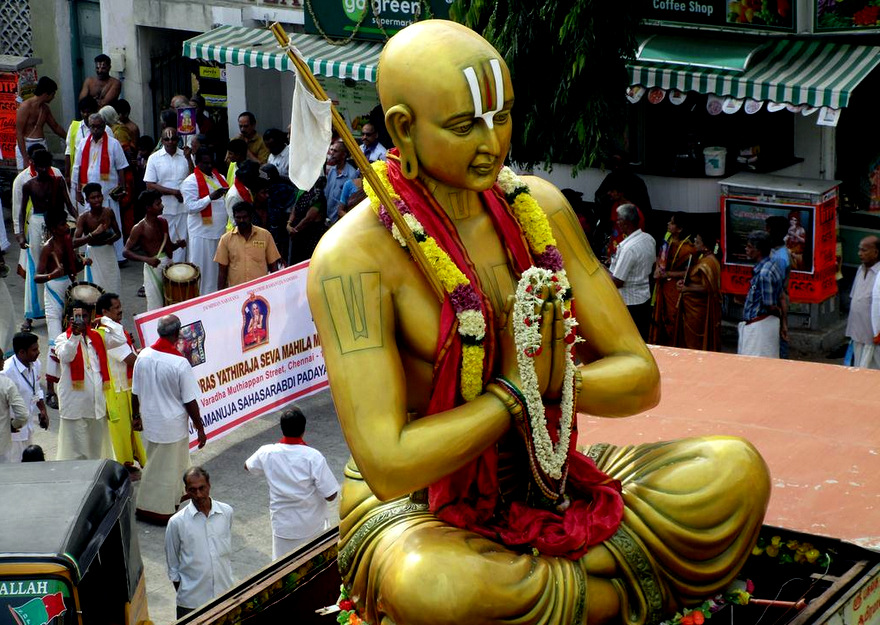
In the year 1090 AD, Ramanuja was running short of a white sand required by devotees to put a holy mark on their forehead. One night, Lord Tirunarayana came into the dream of Ramanuja and told him that He is very near in the town of Melkote. Lord instructed Ramanuja to go to Melkote and find the deity of Lord Tirunarayana as well as the white sand required by him.
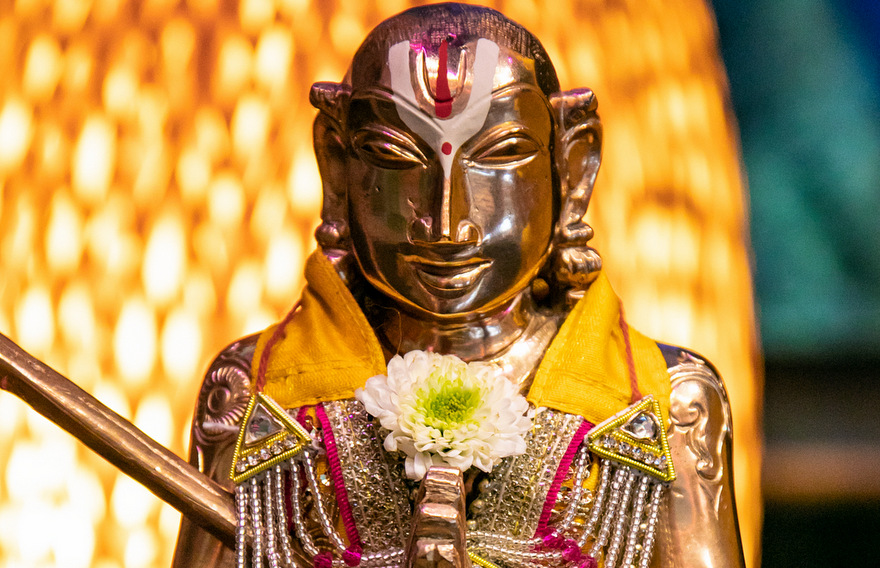
Ramanuja was extremely happy to have this revelation. He sent the message to Vishnuvardhana telling him about his arrival at Melkote as well as the divine revelation. Vishnuvardhana engaged many men to clear the forest around Melkote for the search of the deity. On the first day after Ramanuja reached Melkote, they were unsuccessful in finding the deity as well as the location of white sand.
On that night, Lord Tirunarayana again appeared in Ramanuja's vision and gave him the specific directions for finding the deity. Lord told him that He was situated under a big ant-hill which was located between a Champaka tree and Vakula tree near the south-west corner of a water pond named Kalyani.
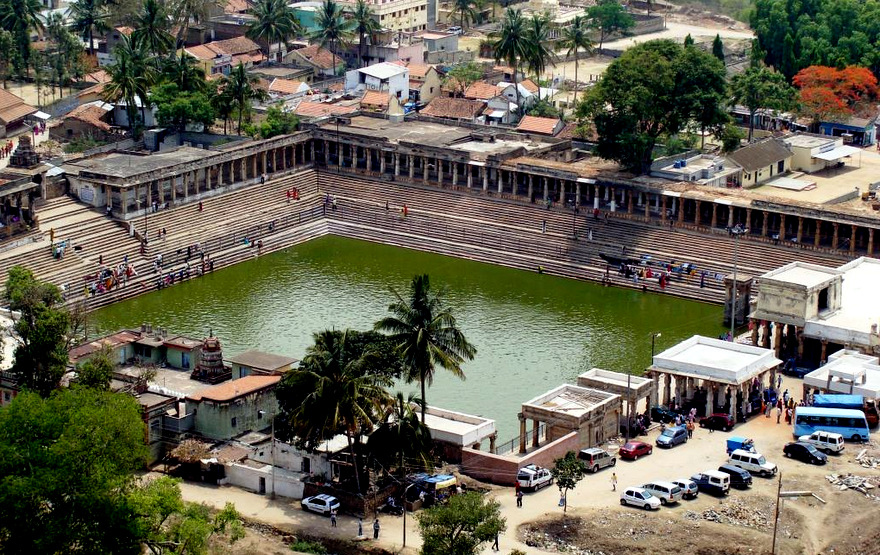
Lord also told Ramanuja that the sacred white sand was located near the north-west corner of the same Kalyani pond.
Ramanuja immediately followed the direction given by Lord and found the ant-hill. Ramanuja and his disciples removed the earth and found the deity of Lord Tirunarayana situated in its spiritual glory. Everyone present there was intoxicated with spiritual bliss after they found the Lord. Ramanuja then bathed the Lord with milk and made arrangements for the worship of the deity as well as the festivals that were to be observed. A temple was erected over the ant-hill and Lord Tirunarayana was thus reinstalled after the ages of oblivion.
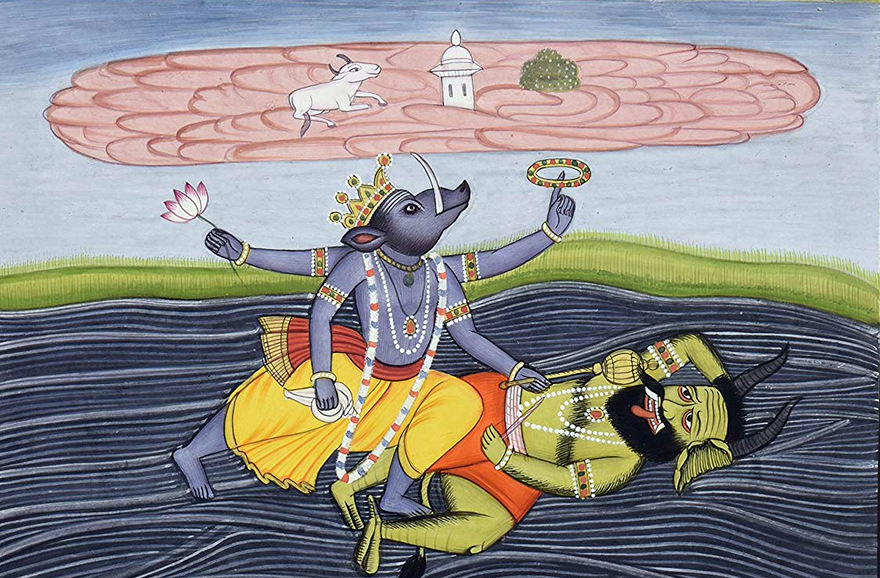
Ramanuja also found the sacred white sand near the north-west corner of the Kalyani pond. The Vedic scriptures explain that this Kalyani pond was formed by the drops of water which fell here when Lord Varaha was carrying mother Earth.
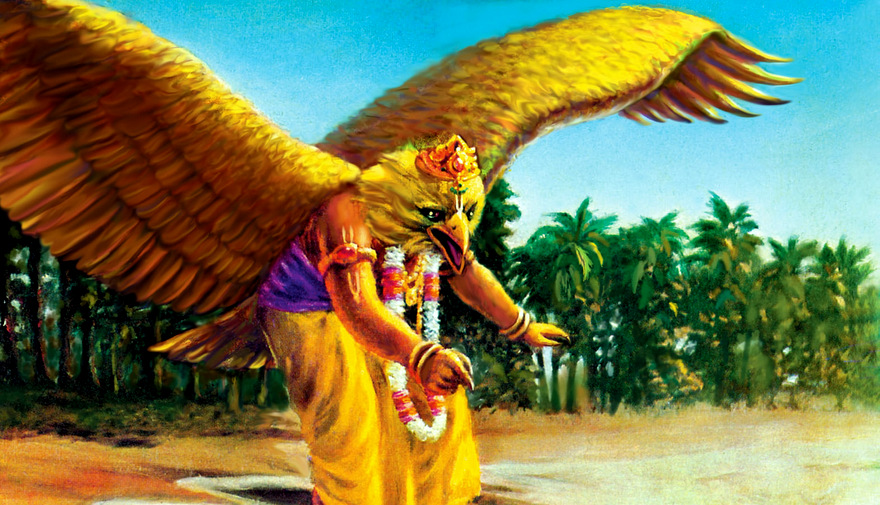
Also the sacred white sand was brought here by Garuda from the planet named Shweta Dweepa where Lord Vishnu resides.
After the revitalization of the town of Melkote, Ramanuja wanted to have an utsava murty in the temple of Lord Tirunarayana. Ramanuja was continuously thinking about how to accomplish this task. One day, Lord Tirunarayana appeared in the vision of Ramanuja and told him, "My utsava murty named Ramapriya is in Delhi inside the house of the Turkish king. Please go there and reclaim the deity of Ramapriya from the king."
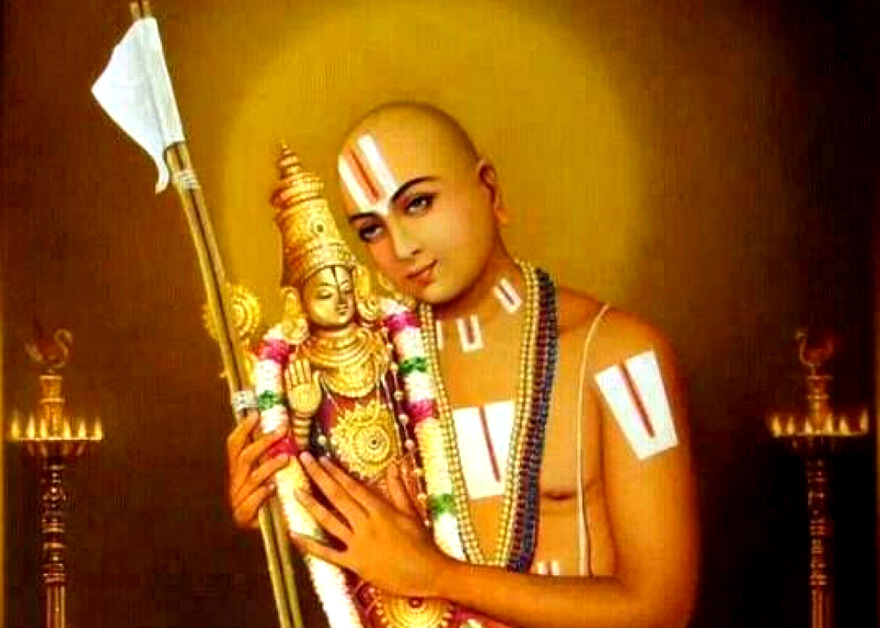
Following Lord's order, Ramanuja travelled all the way to Delhi on foot with some of his disciples. When Ramanuja visited king, he requested the king to return the deity of Ramapriya. King told Ramanuja that he had plundered thousands of deities from all over India and showed him his collection of these deities. Ramanuja wanted the deity of Ramapriya alone, but he could not identify the required deity. That night, when Ramanuja was anxiously thinking about how to find Ramapriya, Ramapriya Himself appeared in his vision and told him, "I am with the king's daughter. She plays with me treating me as her husband and I also reciprocate with her in that way. Please come and find me there."
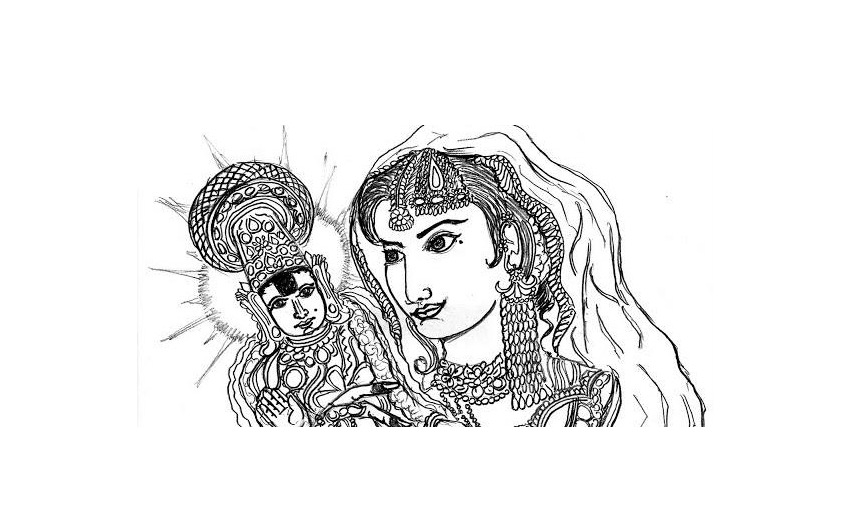
Next day, Ramanuja visited the king and told him about the vision. The king was very much impressed with this revelation and he also developed a respect and adoration for Ramanuja although the king was the follower of Islam. The king took Ramanuja to the inner chambers of his palace where no other man was allowed to enter. Ramanuja saw that king's daughter had placed Ramapriya on a couch.
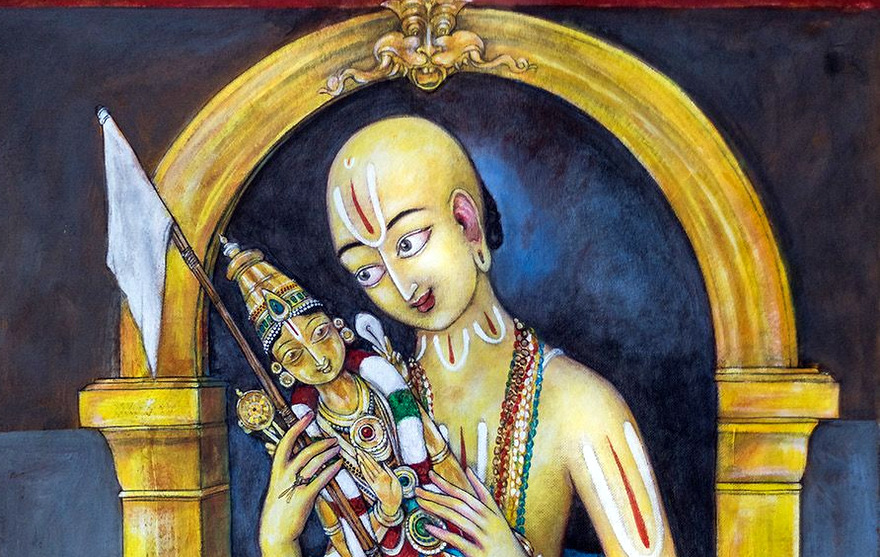
Ramanuja then called Ramapriya by his name and asked him to come towards him. The deity of Ramapriya then jumped down from the couch and walked towards Ramanuja and sat in his lap. The king also witnessed this most astonishing incident and honoured Ramanuja with many gifts.

When king's daughter came to know that Ramapriya was about to be taken away from her, she could not bear the separation from Lord Ramapriya. She requested her father to allow her to go with Ramapriya to Melkote. King happily gave the permission and sent his daughter with Ramanuja along with untold amount of wealth and gifts. The king told Ramanuja, "Your Lord Ramapriya does not go alone but with a wife. Please take care of her." After reaching Melkote, Ramanuja arranged a wedding ceremony between Ramapriya and king's daughter. She served the Lord in Melkote till the end of her days.
We could see little deity of kings daughter Bibi Nancharamma at lotus feet of Lord.

The temple also houses the deity of goddess Shri Cheluvanayaki who is the consort of Lord Ramapriya.
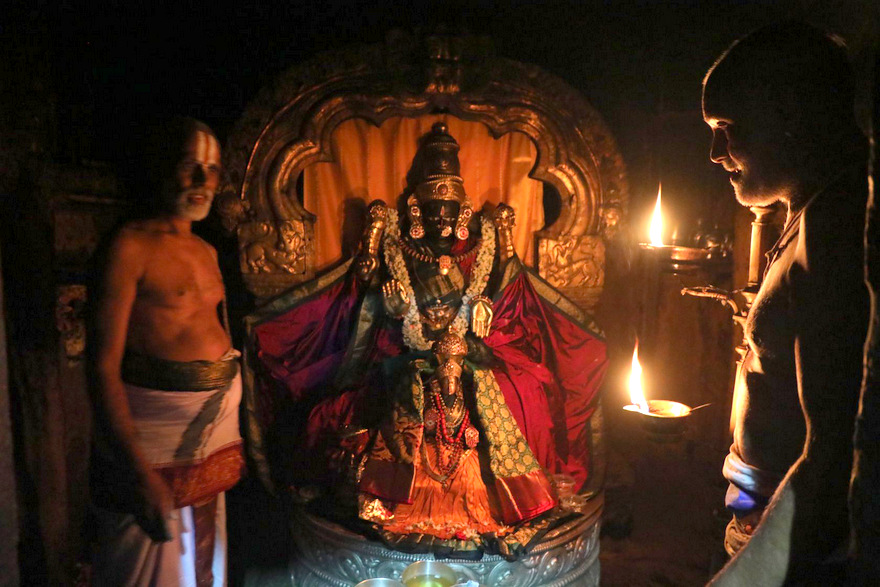
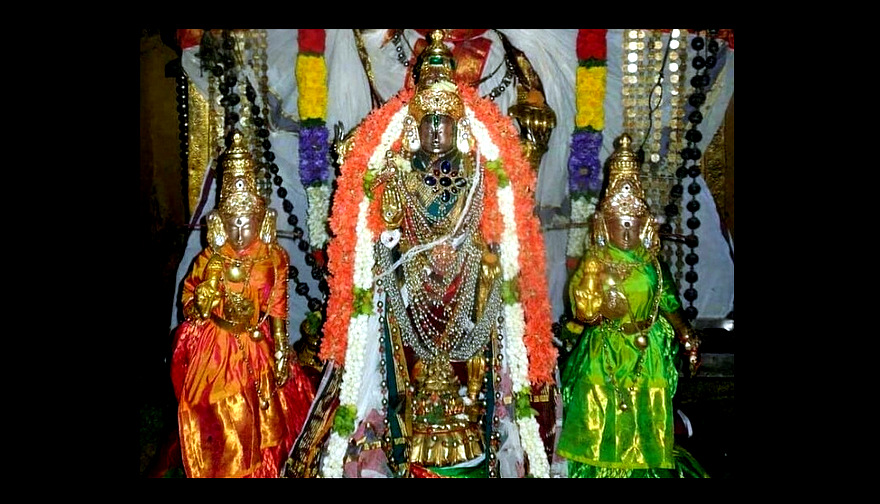
Goddesses Shridevi and Bhudevi sit on the two sides of Lord Ramapriya.
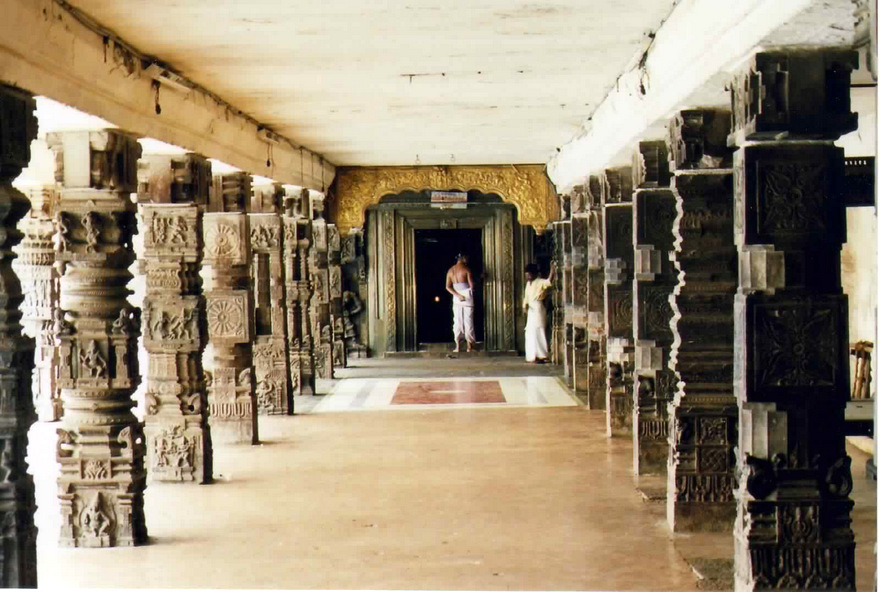
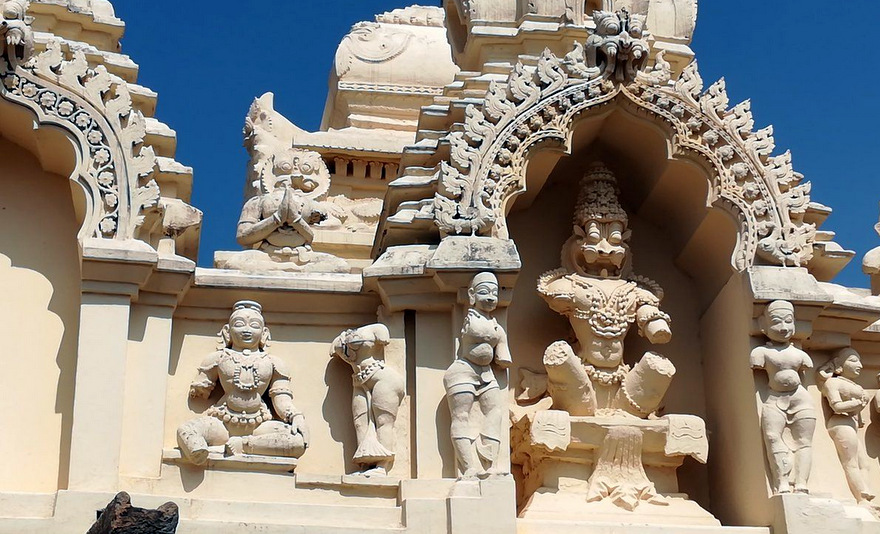
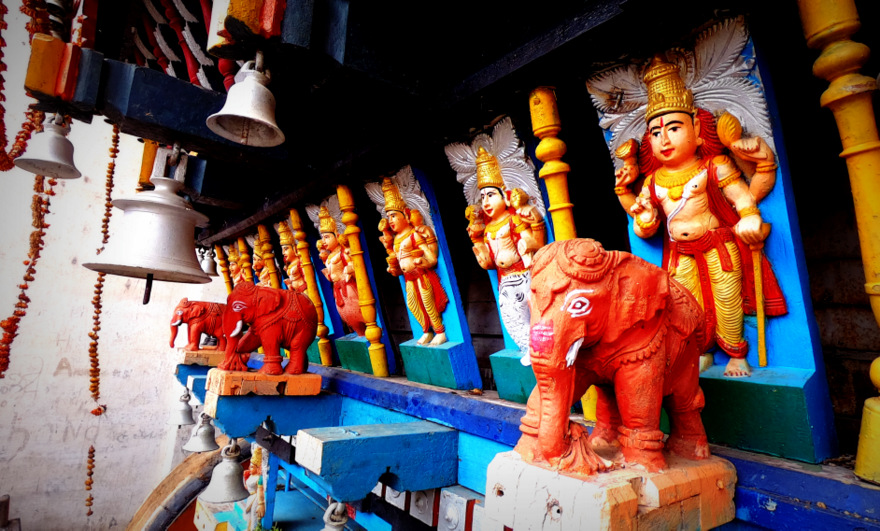
The sculptures in front of Tayar sanctorum are excellent and ultimate masterpieces of craftsmanship which includes sculptures and pillars built in the Dravidian Style of architecture.
Story of this jewelled crown The Vairamudi ("diamond crown") present in this temple is also very interesting. Once Prahlada's demoniac son Virochana visited Lord Vishnu and saw that Lord Vishnu was in meditative trance. Virochana saw the opportunity and stole a jewelled crown which Lord Vishnu was wearing. He took this crown and went to the lower planetary systems of the universe. The devotees of Lord requested Garuda, who serves Lord Vishnu as his bird carrier, to go and retrieve the crown.
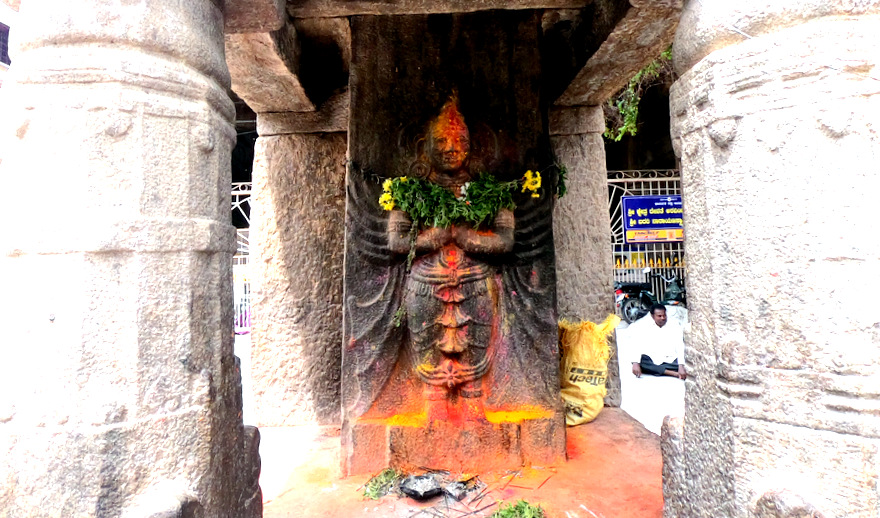
Garuda then went to lower planetary systems and after fighting with Virochana, took possession of the crown. On the way back, He saw Krishna playing with his cowherd friends in Vrindavana. Garuda understood that Lord Krishna is none other than Lord Vishnu and surrendered the crown to Krishna. Krishna decorated the deity of Ramapriya with this crown and it came to Melkote when Krishna brought Ramapriya to Melkote.
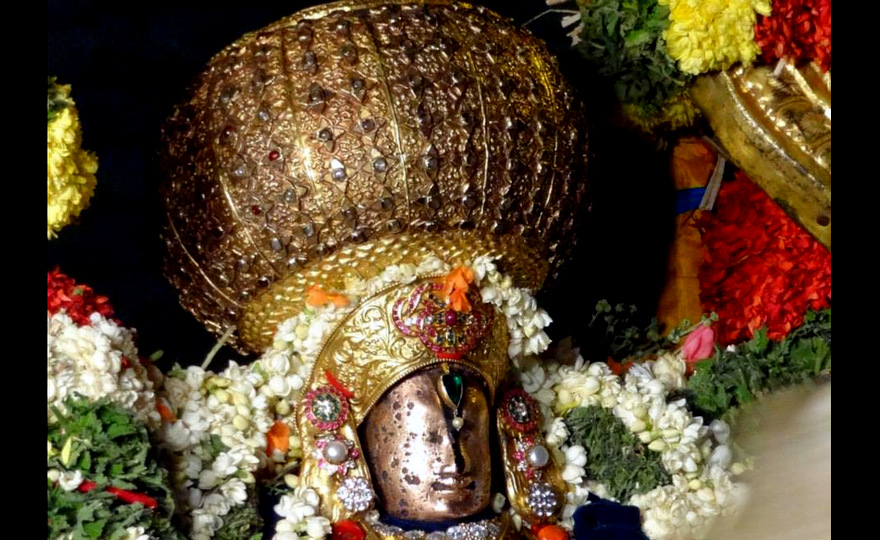
There are other shrines of Ramanuja, images of Alvars and Yadugiriammanavaru etc., in the temple.
On the top of the hill is an attractive Melkote Narasimha temple dedicated to Lord Yoga Narasimha.

This majestic temple is built on a rocky hill known as Yadavagiri or Yadugiri rock overlooking the Cauveri valley. Melkote Bus stand is just at the foothills of Sri Yoga Narasaimhaswwamy Temple. It is a small hill with around 400 steps.
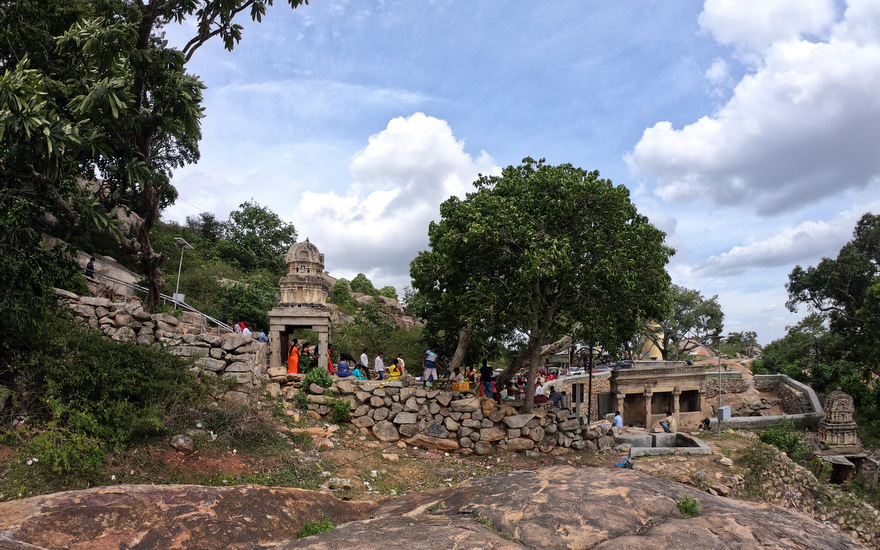
And there is a motorable road reaches us somewhere above the midway of the hill. Autos and Cars can go upto this point and from there, it would be hardly 150 steps to reach the temple through these 150 steps are bit steeper.
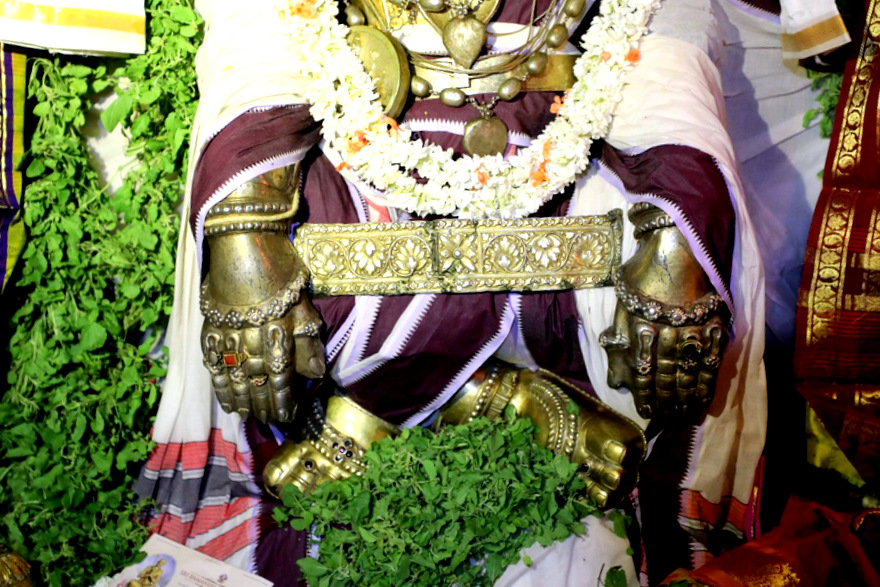
There are refreshments available (tender coconut, mangoes, cucumber, butter milk, water, etc.,) throughout the way and visitors can rest and replenish themselves anytime.
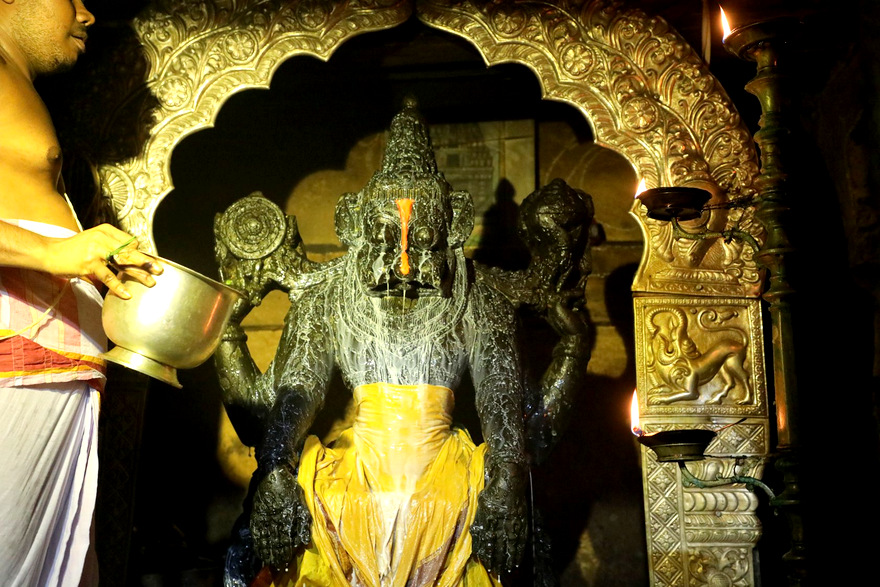
It is believed that the image of Yoga Narasimha temple at melkote was installed by Prahlada himself.
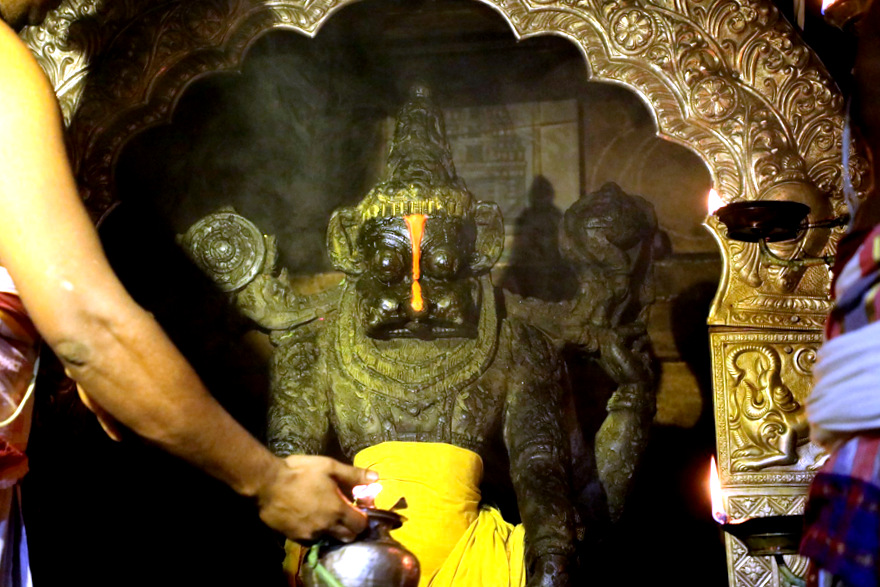
Krishnaraja Wodeyar III presented a gold crown to Lord Yoga Narasimha.
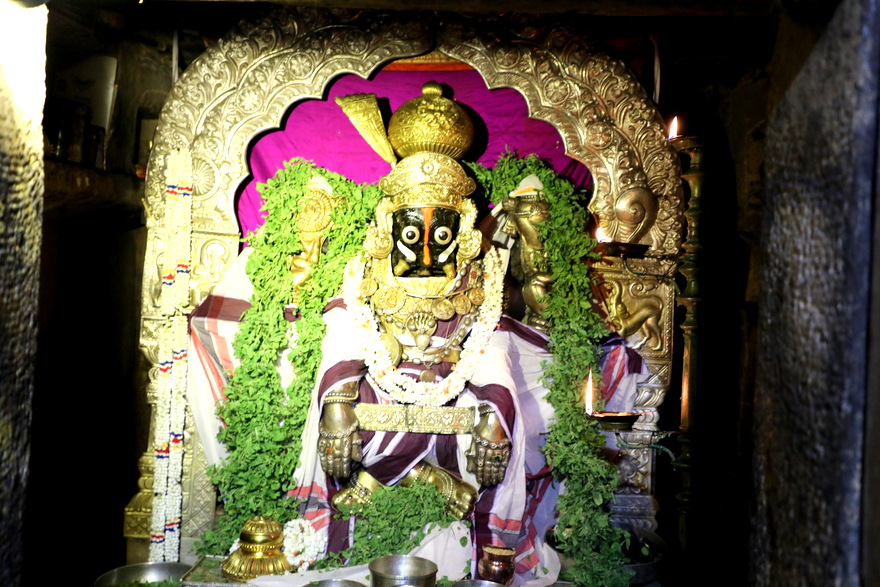
As in any other hill temples, here also, few monkeys were spotted but, they are harmless. This temple is more than 1000 years old and the inscriptions in the foothills speaks about the history of the temple which dates back to the ancient times.
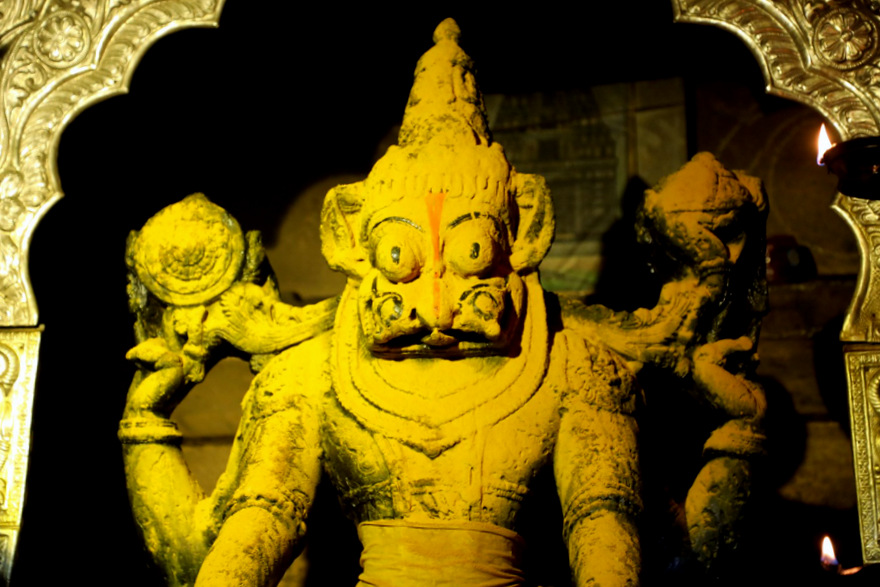
The temple was built during the Hoysala kingdom.

The temple has a huge drum that was donated by Tipu Sultan. It has a beautiful bell that was donated by the Mysore Parakalamatha. During the rule of the erstwhile Wodeyar Kings of Mysore, Krishnaraja Wodeyar III had donated a gold crown to the temple deity.
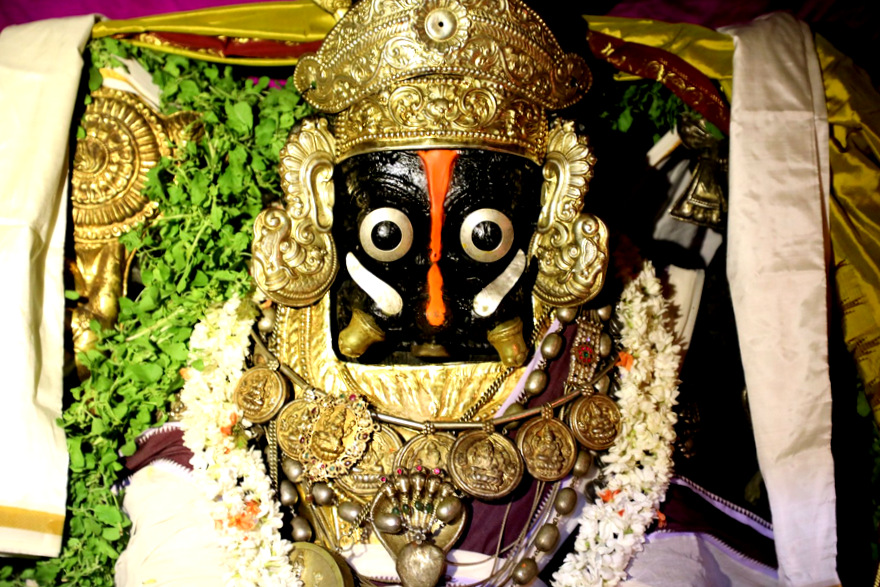
The panoramic view of the little town of Melukote and the pushkarini from the top of this mountain amidst cool breeze was quite a sight.
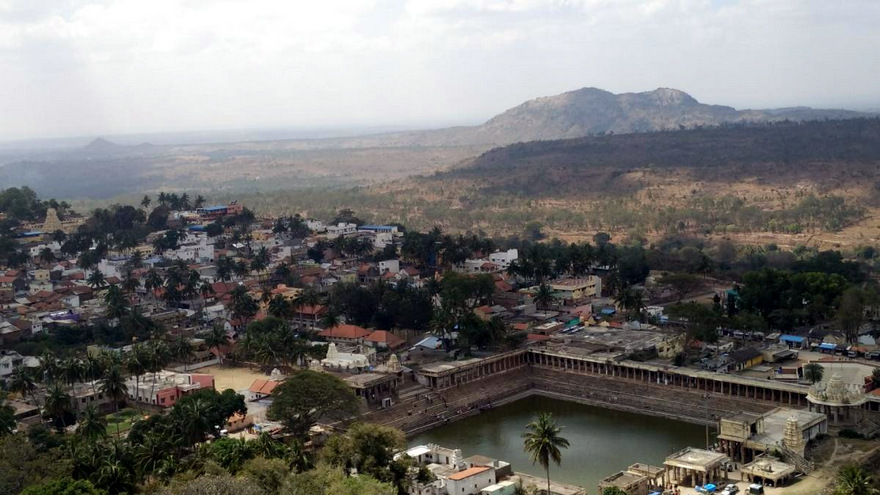
Pushkarini (the main lake) here is 'Kalyani Thirtha'. It has its own sanctity. It is believed that ' Kalyani' was formed from a drop of sweat of the Adi Varaha Murthy when he was carrying mother-earth (Bhoodevi). River Ganga resides in Kalyani in Phalguna month. One will earn the fruits of endeavor when Pooja is performed on its bank.
Daily Temple priest carries water that required in temple from this tank.
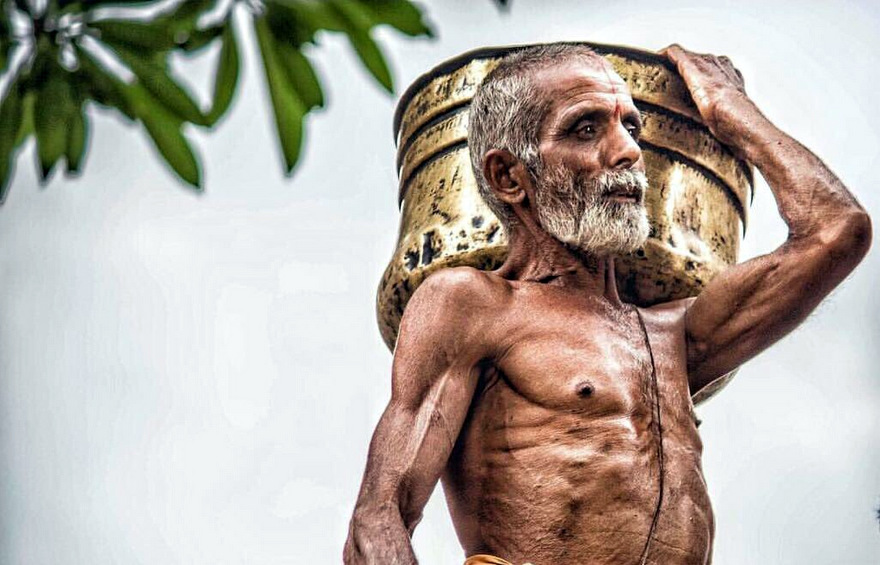
There are shelters constructed around Kalyani and there are a number of religious institutions. Three sanctums of the seven sanctums (Saptha Kshetra) are on the banks of Kalyani.
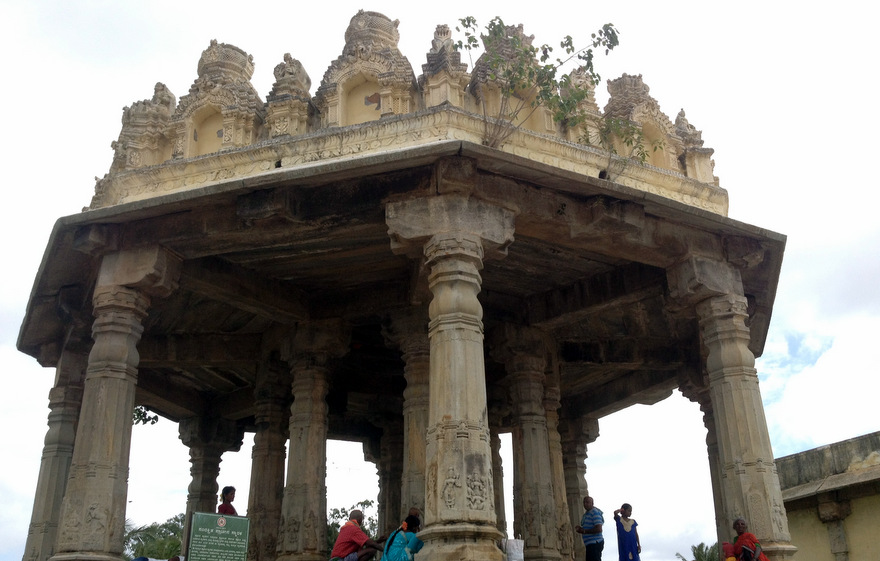
In 2019, Infosys Foundation launched ambitious project to restore this Panchakalyani, the largest of 108 ancient temple tanks with history of 1000 plus years at Melukote in Mandya district. The project will take 2-3 years for completion and is expected to cost about Rs 10 crore.

There two lakes side by side below the Roya Gopuram known as Sisters' Lake (Akka Thangiyara Kola). They are also called Cheluva Arasana kola. Cheluva Arasa had two wives, who were sisters. These lakes were built in their memory. These are in fact twin lakes, almost attached to each other and one is larger than the other.
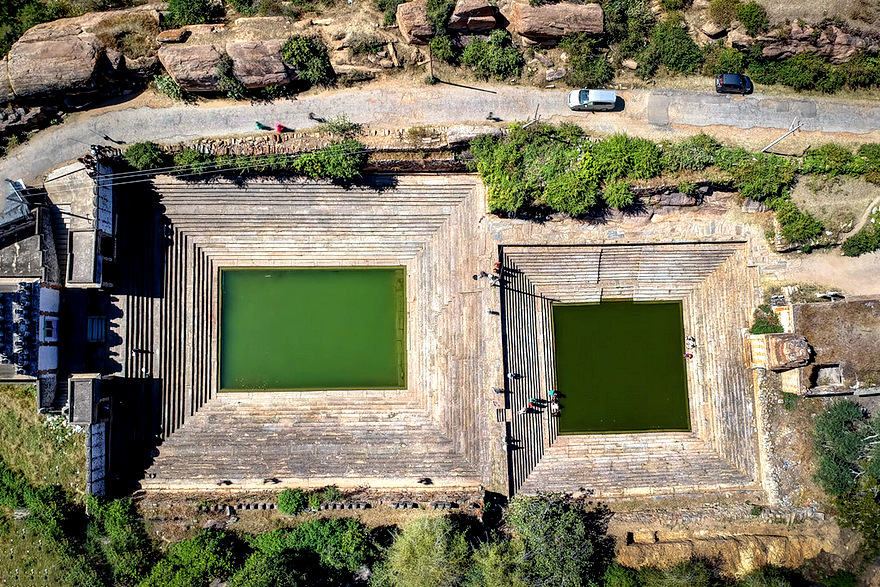
It is said that the elder sister built the small lake and the younger sister built the large lake. The water in large lake is sweet and potable. People in the town use this for drinking purposes. The smaller lake is used for washing.
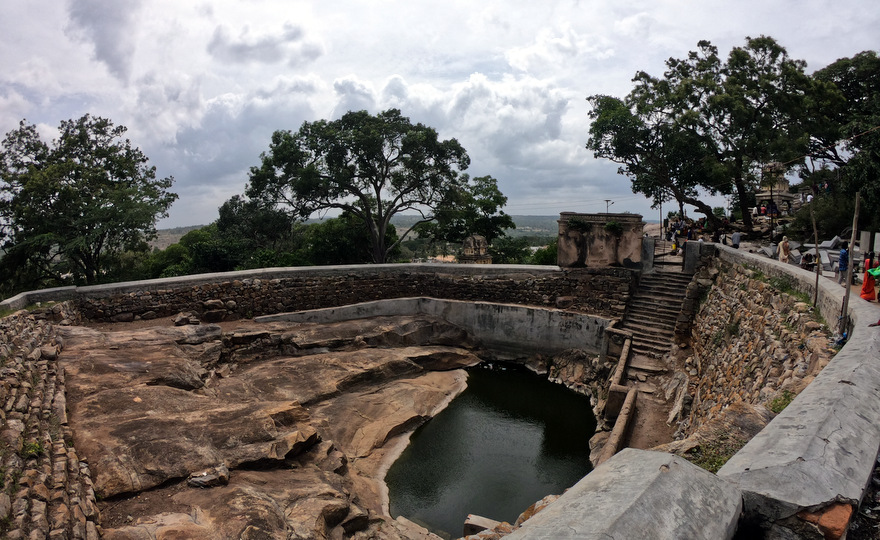
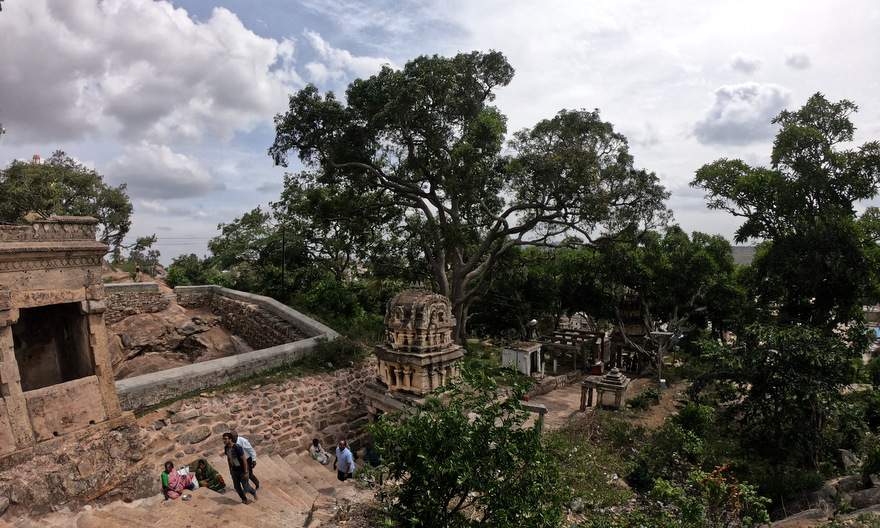
Other than above mentioned , there are nine other teerthas in this place, which are namely as below.
Veda Pushkarini, Yadava Teertha, Palasha Teertha, Darbha Teertha, Padma Teertha, Maitreya Teertha, Narayana Teertha, Vaikuntha Ganga, Dhanushkoti.
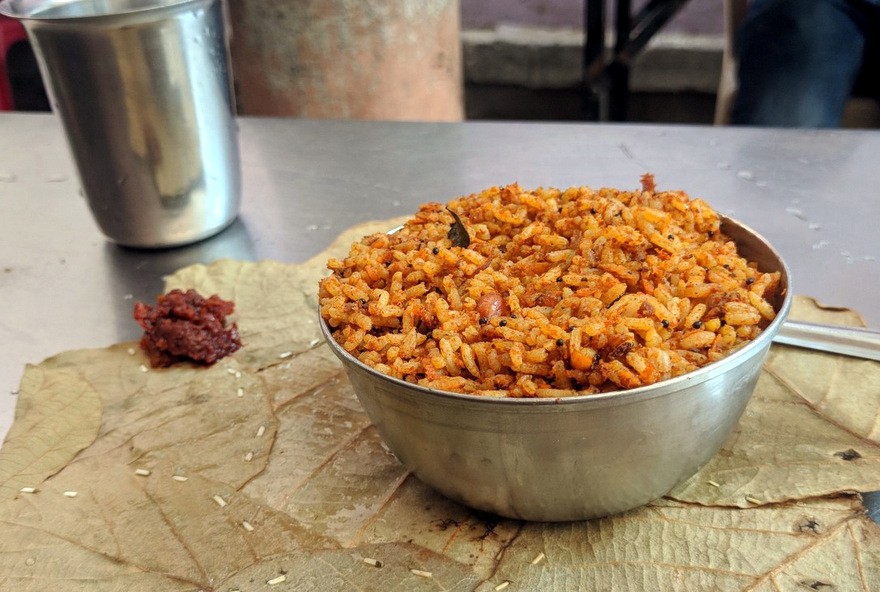
The Puliyogare and Thuni Thengol are famous prasadams of the shrine. The prasadam here is phenomenal and hence popularly known as the 'Melkote Puliyogare' or the 'Iyengar Puliyogare' worldwide.
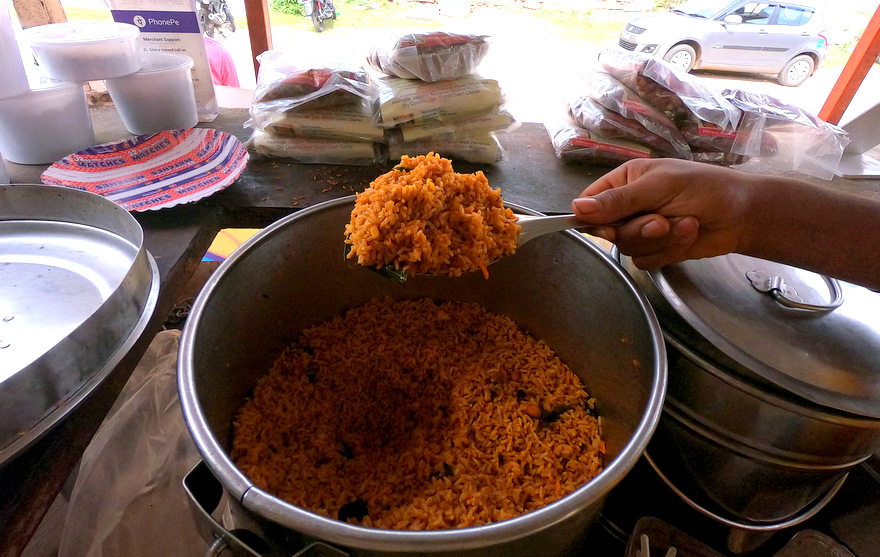
As prepared by the Iyengar community who are the temple priests of the town. In whole village we could see many shops selling this puliyogare and sweet pongal.
There are other holy places in Melkote as below :
Paridhanashila Kshetra, Yoga Narasimha Kshetra, Dnyana Ashwattha Kshetra, Taarkshya Kshetra, Nayana Kshetra, Varaha Kshetra, Seeta Aranya Kshetra.
The town is also home for Academy of Sanskrit Research and Library and Sanskrit College.
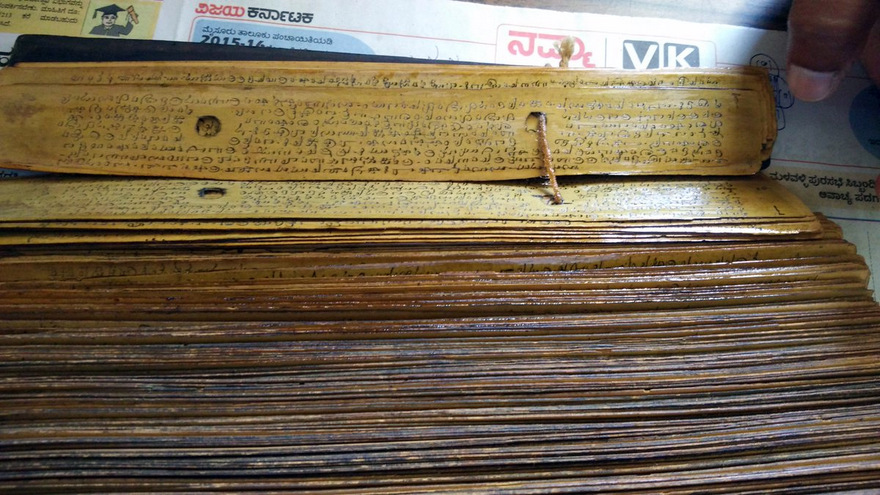
People of Melkote do not celebrate Deepawali (the festival of lights) till date since November 10th 1790 (Naraka Chaturdashi). It was the date when Tipu Sultan slaughtered in many cruel ways more than 800 Mandyam Iyengars of this town.
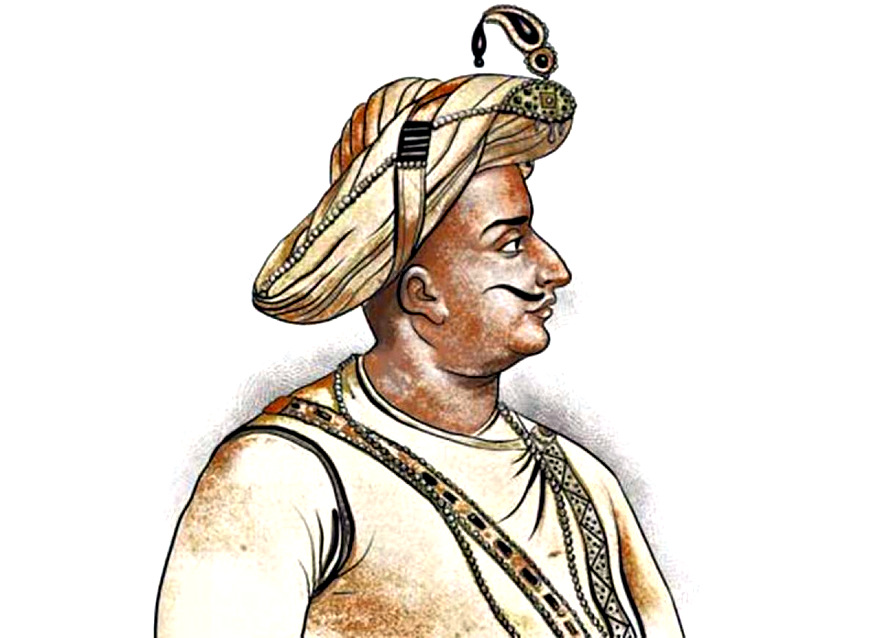
People of Melukote thus do not celebrate Deepawali but mourn on the festival of lights every year. Even today, its very bad feel to see that each and every statue all around the temple complex is broken and never rebuilt.
Sri Vairamudi Brahmotsava is one of the major annual festivals that are celebrated in this Melukote temple.
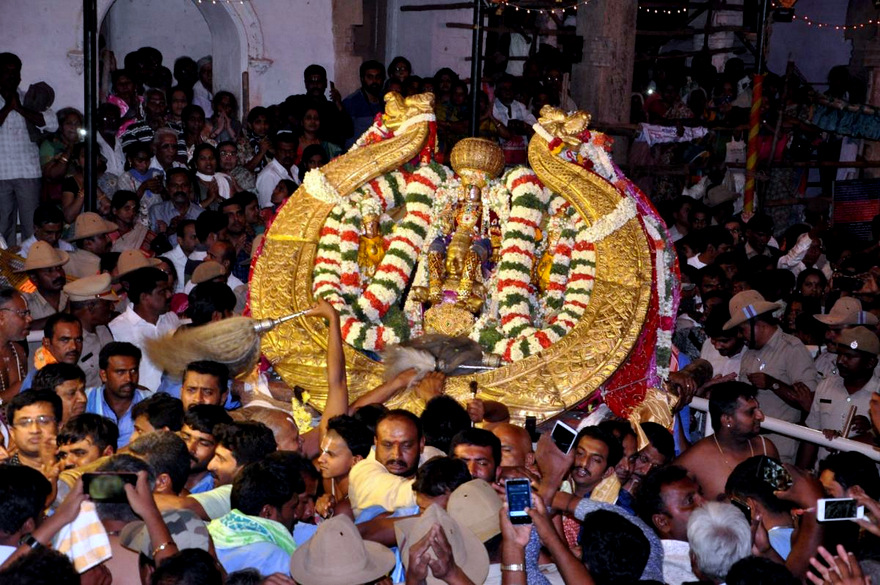
A fair is also conducted around the temple premises during this time. This festival is attended by more than 400,000 people. Special poojas are performed during other Hindu festivals like Vaikunta Ekadashi, Gokulashtami, Ramanavami, Rathayatra etc…
Posted by: =?UTF-8?Q?=E2=99=A3_=E2=99=A3_=E2=99=A3M=2ED=2E_?= =?UTF-8?Q?HEGDE=E2=99=A3_=E2=99=A3_=E2=99=A3?= <hegde_csl@yahoo.co.in>
| Reply via web post | • | Reply to sender | • | Reply to group | • | Start a New Topic | • | Messages in this topic (1) |
To subscribe send a mail to Keralites-subscribe@yahoogroups.com.
Send your posts to Keralites@yahoogroups.com.
Send your suggestions to Keralites-owner@yahoogroups.com.
To unsubscribe send a mail to Keralites-unsubscribe@yahoogroups.com.
Homepage: http://www.keralites.net


L