Monday, 3 February 2014

[www.keralites.net] 6 Habits of True Strategic Thinkers


In the beginning, there was just you and your partners. You did every job. You coded, you met with investors, you emptied the trash and phoned in the midnight pizza. Now you have others to do all that and it's time for you to "be strategic." 
Whatever that means.

If you find yourself resisting "being strategic," because it sounds like a fast track to irrelevance, or vaguely like an excuse to slack off, you're not alone. Every leader's temptation is to deal with what's directly in front, because it always seems more urgent and concrete. Unfortunately,
if you do that, you put your company at risk. While you concentrate on steering around potholes, you'll miss windfall opportunities, not to mention any signals that the road you're on is leading off a cliff.

This is a tough job, make no mistake. "We need strategic leaders!" is a pretty constant refrain at every company, large and small. One reason the job is so tough: no one really understands what it entails. It's hard to be a strategic leader if you don't know what strategic leaders are supposed to do.
After two decades of advising organizations large and small, my colleagues and I have formed a clear idea of what's required of you in this role. Adaptive strategic leaders — the kind who thrive in today's uncertain environment – do six things well:
 

Anticipate 

Most of the focus at most companies is on what's directly ahead. The leaders lack "peripheral vision." This can leave your company vulnerable to rivals who detect and act on ambiguous signals. To anticipate well, you must:
 
  • Look for game-changing information at the periphery of your industry
  • Search beyond the current boundaries of your business
  • Build wide external networks to help you scan the horizon better

Think Critically

"Conventional wisdom" opens you to fewer raised eyebrows and second guessing. But if you swallow every management fad, herdlike belief, and safe opinion at face value, your company loses all competitive advantage. Critical thinkers question everything. To master this skill you must force yourself to:
 
  • Reframe problems to get to the bottom of things, in terms of root causes
  • Challenge current beliefs and mindsets, including your own
  • Uncover hypocrisy, manipulation, and bias in organizational decisions

Interpret 

Ambiguity is unsettling. Faced with it, the temptation is to reach for a fast (and potentially wrongheaded) solution.  A good strategic leader holds steady, synthesizing information from many sources before developing a viewpoint. To get good at this, you have to:
 
  • Seek patterns in multiple sources of data
  • Encourage others to do the same
  • Question prevailing assumptions and test multiple hypotheses simultaneously

Decide

Many leaders fall prey to "analysis paralysis." You have to develop processes and enforce them, so that you arrive at a "good enough" position. To do that well, you have to:
 
  • Carefully frame the decision to get to the crux of the matter
  • Balance speed, rigor, quality and agility. Leave perfection to higher powers
  • Take a stand even with incomplete information and amid diverse views

 Align

Total consensus is rare. A strategic leader must foster open dialogue, build trust and engage key stakeholders, especially when views diverge.  To pull that off, you need to:
 
  • Understand what drives other people's agendas, including what remains hidden
  • Bring tough issues to the surface, even when it's uncomfortable
  • Assess risk tolerance and follow through to build the necessary support

Learn

As your company grows, honest feedback is harder and harder to come by.  You have to do what you can to keep it coming. This is crucial because success and failure--especially failure--are valuable sources of organizational learning.  Here's what you need to do:
 
  • Encourage and exemplify honest, rigorous debriefs to extract lessons
  • Shift course quickly if you realize you're off track
  • Celebrate both success and (well-intentioned) failures that provide insight

Do you have what it takes?

Obviously, this is a daunting list of tasks, and frankly, no one is born a black belt in all these different skills. But they can be taught and whatever gaps exist in your skill set can be filled in. I'll cover each of the aspects of strategic leadership in more detail in future columns. But for now, test your own strategic aptitude (or your company's) with the survey at
www.decisionstrat.com. In the comments below, let me know what you learned from it.

 
Paul J. H. Schoemaker: Founder and Chairman, Decision Strategies Intl. Speaker, professor, and entrepreneur. Research Director, 

www.keralites.net   

__._,_.___
Recent Activity:
KERALITES - A moderated eGroup exclusively for Keralites...

To subscribe send a mail to Keralites-subscribe@yahoogroups.com.
Send your posts to Keralites@yahoogroups.com.
Send your suggestions to Keralites-owner@yahoogroups.com.

To unsubscribe send a mail to Keralites-unsubscribe@yahoogroups.com.

Homepage: http://www.keralites.net
.

__,_._,___

[www.keralites.net] 4TH FEBRUARY VASANT PANCHAMI


04th February 2014 is Vasant Panchami birthday of Goddess "Saraswathi Devi". Though we hindus perform sarswathi pooja/Vidyarambham pooja on Navarathri days most people will also perform Vidyarambham pooja on Vasant Panchami also as it is celbrated as saraswathi devi's birthday. We pray to her to gain knowledge, dispassion, devotion and prosperity. We also believe that she bestows on us clarity of thought and nobility of ideas.


For Hindus, Goddess Saraswathi is the Goddess of learning and we pray to her for academic as well as spiritual knowledge. Literally Saraswathi means, "the flowing one". In the Vedas she represents a river and the deity presiding over it. Hence she is connected with fertility and purification.

she is represented  with four hands (representing four aspects of human personality in learning: mind power, intellect, attentiveness and self worth. Alternatively, these four arms also represent the four Vedas, the primary sacred books for Hindus. The Vedas, in turn, represent the three forms of literature:

Poetry — the Rigveda contains hymns, representing poetry.

Prose — Yajurveda contains prose.

Music — Samaveda represents music.


The four hands also depict this thus—prose is represented by the book in one hand, poetry by the garland of crystal, and music by the veena.


Being the consort of Brahma, the creator, she represents his power and intelligence, without which organized creation is impossible.


Inline image 1
 

The goddess Saraswati is often depicted as a beautiful woman dressed in pure white. Knowledge is the antithesis of the darkness of ignorance. Hence she is depicted wearing white dress and the white color symbolizes purity and knowledge which denotes that she is the embodiment of pure knowledge.

Seated on a white lotus, symbolizes her wisdom, truth and purity that she founded in the experience of the absolute truth. Lotus represents detachment(Vairagya).The water touches it but cannot make it wet.Similarly, the spiritual mind endures all adversities with a smile(sorrows around but not sorrowful). The lotus is a symbol of the Supreme Reality, and a white lotus also denotes supreme knowledge. Thus, she not only has the knowledge but also the experience of the highest reality.

Two mounts, the swan and the peacock are attributed to her. White swan stands for Vidya or spiritual illumination.swan is known for its peculiar capability of separating milk from the water. This is literally known as, water-milk wisdom in Indian philosophy and signifies that people should have the ability to discern the good from the bad.The peacock represents a colourful life and also represents arrogance and pride over its beauty.By having a peacock as her mount, the goddess teaches not to be concerned with external appearance and to be wise regarding the eternal truth.It is to teach this great truth to us that Mother Saraswati has chosen the two mounts, the swan and the peacock.

Being the goddess of learning, that she is shown holding a book in her left hand reflect knowledge and wisdom, which are the basis of the sixty-four art forms. These art forms express the supremacy of the Indian culture that can never become extinct or be destroyed. The akshamala in the right hand symbolizes all spiritual sciences. 


The veena she holds, shows the need for cultivation of fine arts to show that higher feelings, sentiments and emotions are necessary besides intellectual learning. This symbol conveys that the seeker must tune his mind and intellect in order to live in perfect harmony with the world. Such harmonious living enables the individual to utilize acquired knowledge for the welfare of all mankind. Some images of her depicts holding pen in her hand, which represents the power to manifest truth through words, thus making the written word immortal for ages to come.


SIGNIFICANCE OF VASANT PANCHAMI:-


Inline image 1


Vasant Panchami is a festival full of religious, seasonal and social significance and is celebrated by Hindus all over the world especially by the people who are in arts and music. The most significant aspect of Vasant Panchami is that it is most auspicious day to begin  laying one's foundations of education – of how to read and write. Pre-school children are given their first lesson in reading and writing on this day. It is also a great day to inaugurate training institutes and new schools. The great Indian guru Pandit madan mohan malviya laid the foundations of Kashi Hindu Vishwa Vidyalaya on Vasant Panchami.

Traditionally during this festival children are taught to write their first words. This ritual of initiating education to children is known as Aksharaabhyasam or Vidyaarambham which is one of the famous rituals held during Vasant Panchami. With Her grace, the mute, it is believed, have been able to speak and people have been blessed with the ability to write or compose poems. Musicians sing here and many even choose to perform here first. Instrumentalists have puja performed for their instruments here. Apart from art and culture, Goddess Saraswathi also showers Her blessings for the education of children.

Goddess Saraswathi presides over and protects every form of art. Devotees believe that worshipping of goddess Saraswati will lead to spiritual enlightenment. It is generally said that there is no comparison between a king and a learned person as the king is honored only in his kingdom but a learned person is respected everywhere.


--
Aano bhadra krtavo yantu vishwatah.(- RIG VEDA)
"Let noble thoughts come to me from all directions"

REGARDS
Miss.Shaija Vallikatri Bhaskaran

www.keralites.net   

__._,_.___
Recent Activity:
KERALITES - A moderated eGroup exclusively for Keralites...

To subscribe send a mail to Keralites-subscribe@yahoogroups.com.
Send your posts to Keralites@yahoogroups.com.
Send your suggestions to Keralites-owner@yahoogroups.com.

To unsubscribe send a mail to Keralites-unsubscribe@yahoogroups.com.

Homepage: http://www.keralites.net
.

__,_._,___

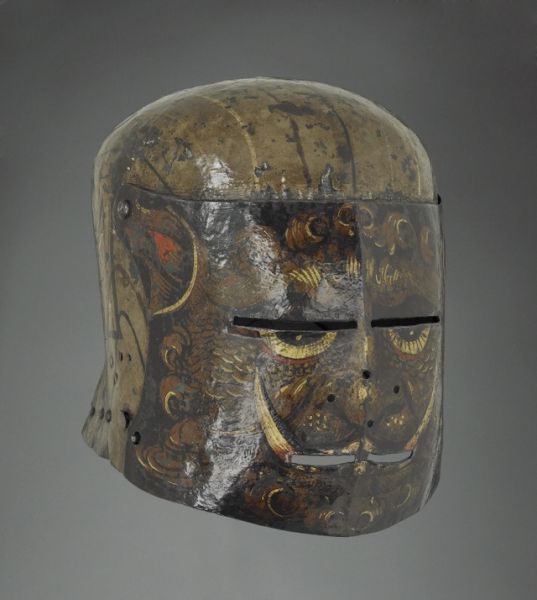
[www.keralites.net] HELMETS FROM TIME GONE BY


www.keralites.net   

__._,_.___
Recent Activity:
KERALITES - A moderated eGroup exclusively for Keralites...

To subscribe send a mail to Keralites-subscribe@yahoogroups.com.
Send your posts to Keralites@yahoogroups.com.
Send your suggestions to Keralites-owner@yahoogroups.com.

To unsubscribe send a mail to Keralites-unsubscribe@yahoogroups.com.

Homepage: http://www.keralites.net
.

__,_._,___